
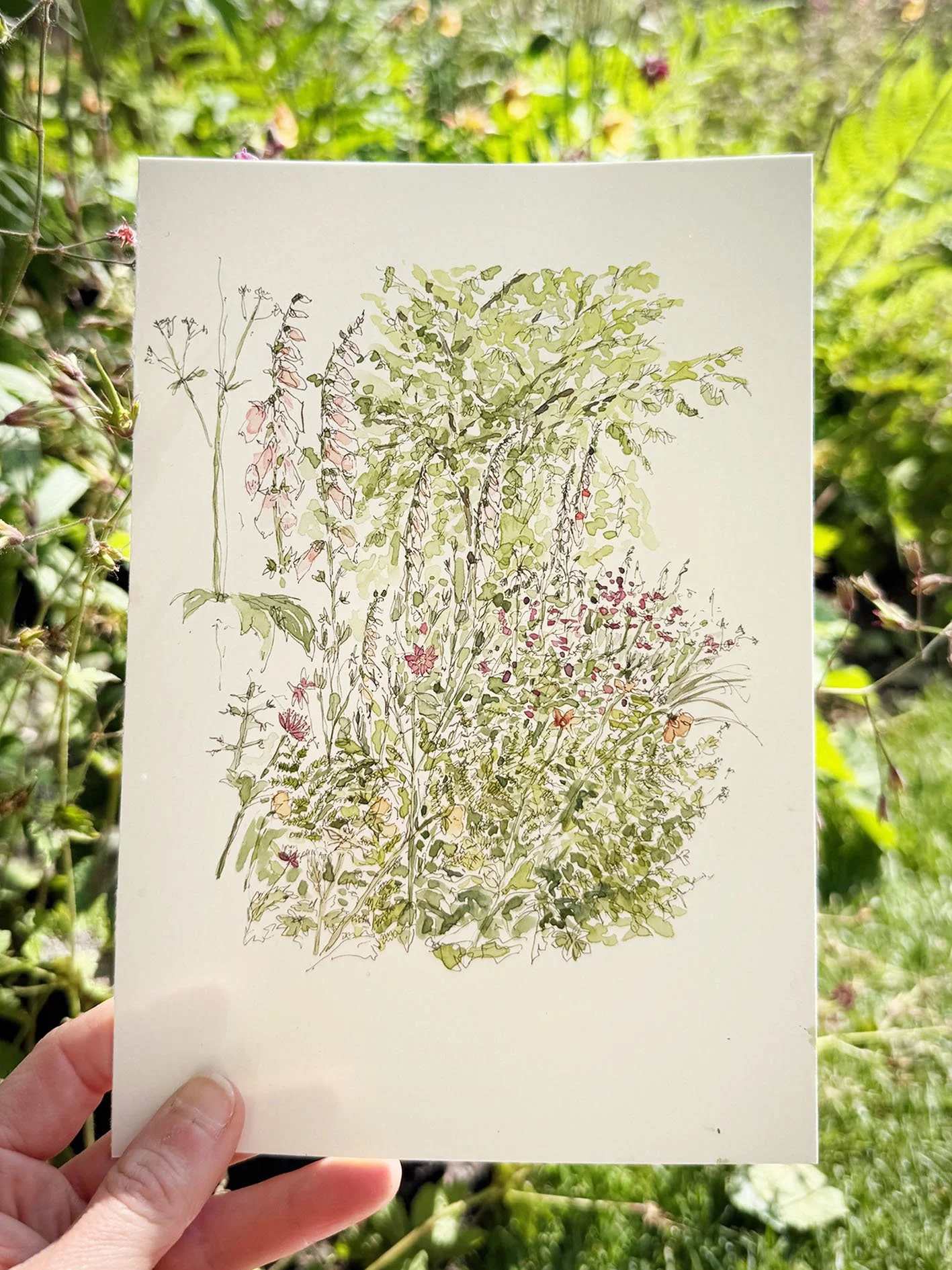
The Chelsea Flower Show is famous for its gardens, for inspiring new designs and for being ‘the place to be’ for enthusiastic gardeners, designers and people.
As a watercolour illustrator, I went to Chelsea Flower Show 2025 with my sketchbook, my paints (forgot my brushes, but thankfully had an emergency one!), and a curiosity of the stories behind the gardens. What I actually didn’t expect was how much I’d learn just from drawing, listening, and being part of the conversations happening around me.
This post brings together the illustrations I created, the gardens that I was most drawn to, and some thoughts around the spaces I captured.
If you’d like to read my thoughts on the day as a whole or one of the most stand out gardens for me, you can explore these posts:
Chelsea Flower Show: An Illustrator’s Creative + Honest Reflection
Illustrating the Glasshouse Garden
Illustrating the Chelsea Flower Show: Garden by Garden
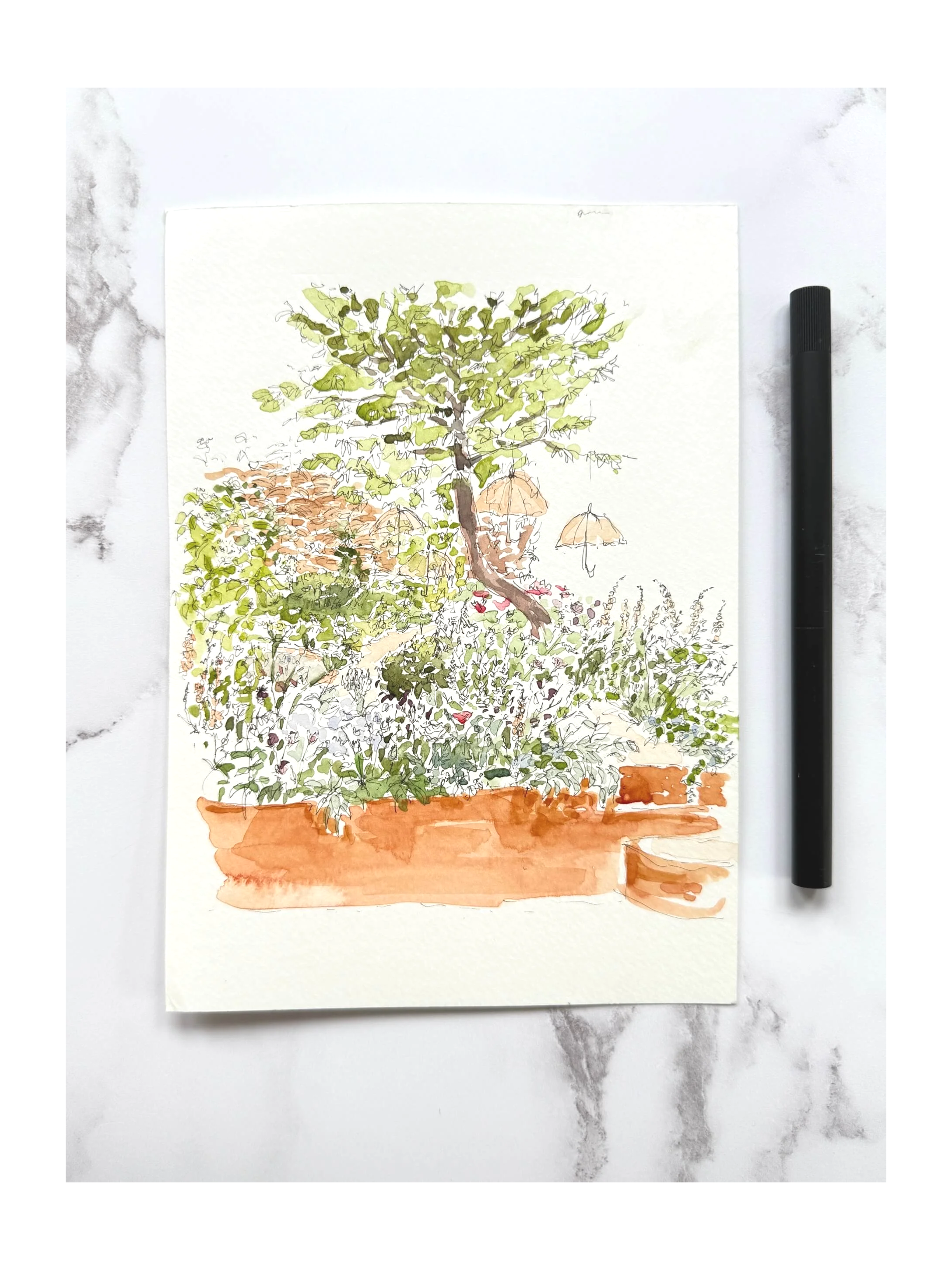
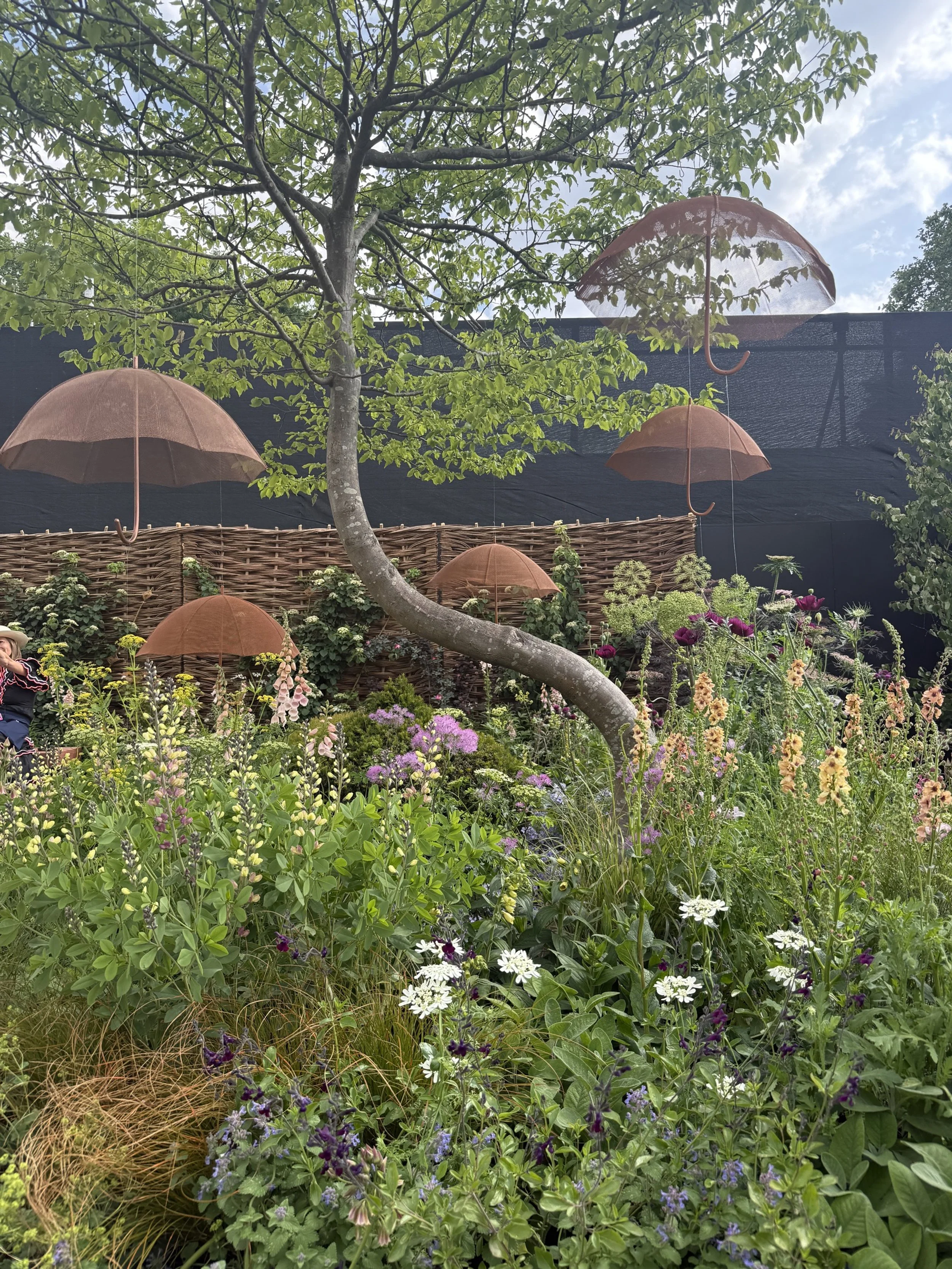
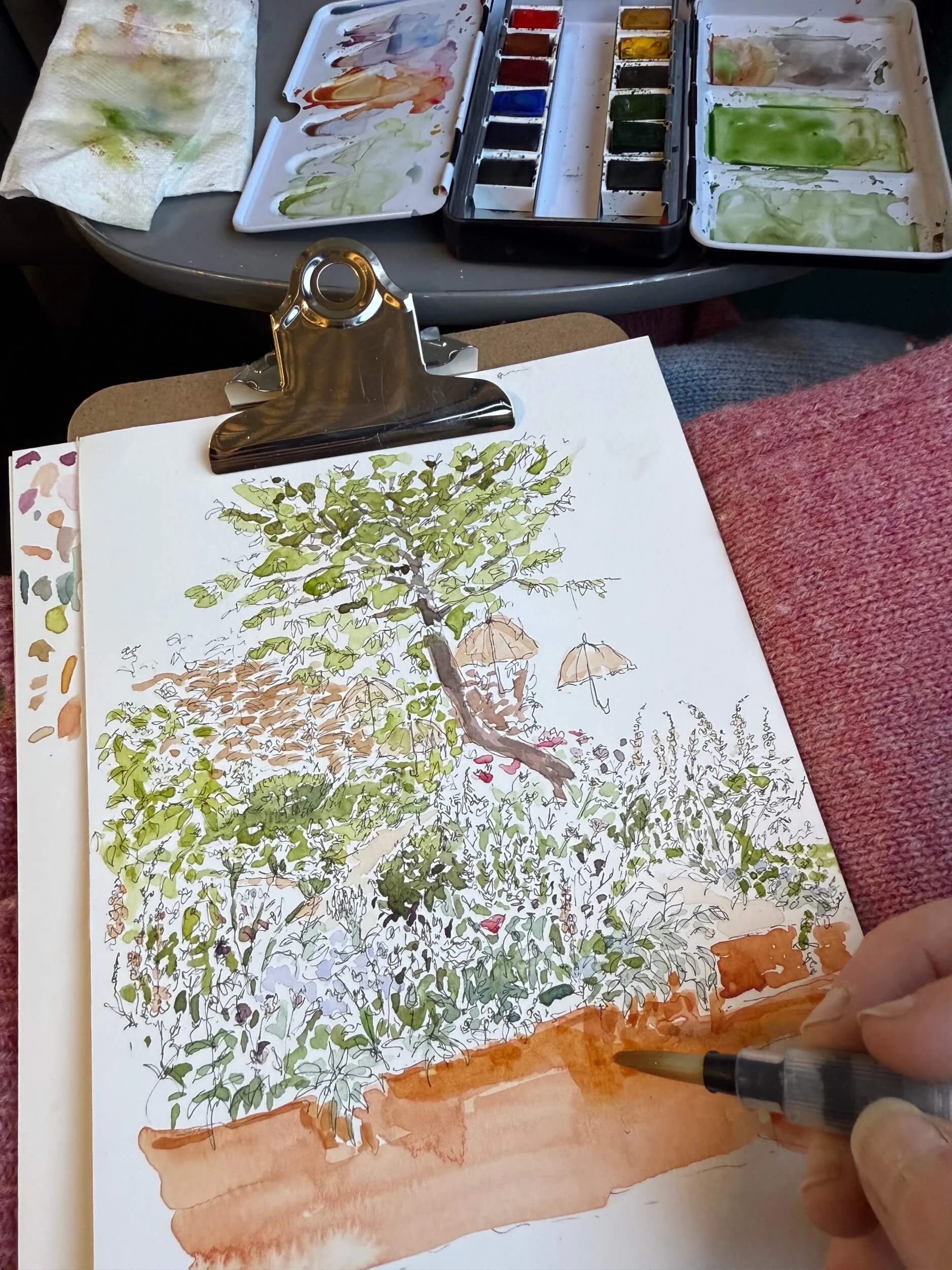
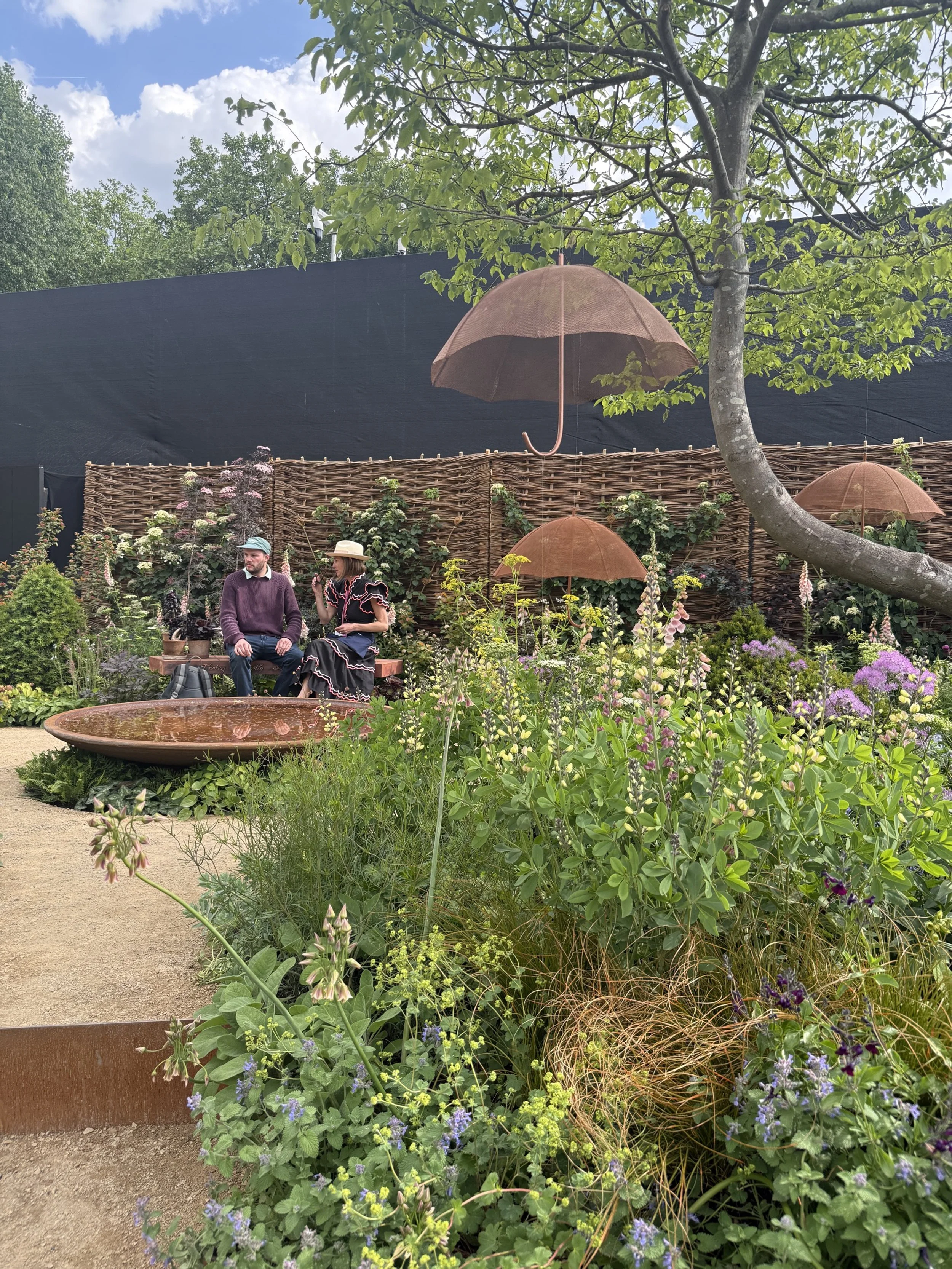
Below are the sketches I made on the day, along with the stories, thoughts, and conversations behind them.
The Glasshouse Garden (briefly)
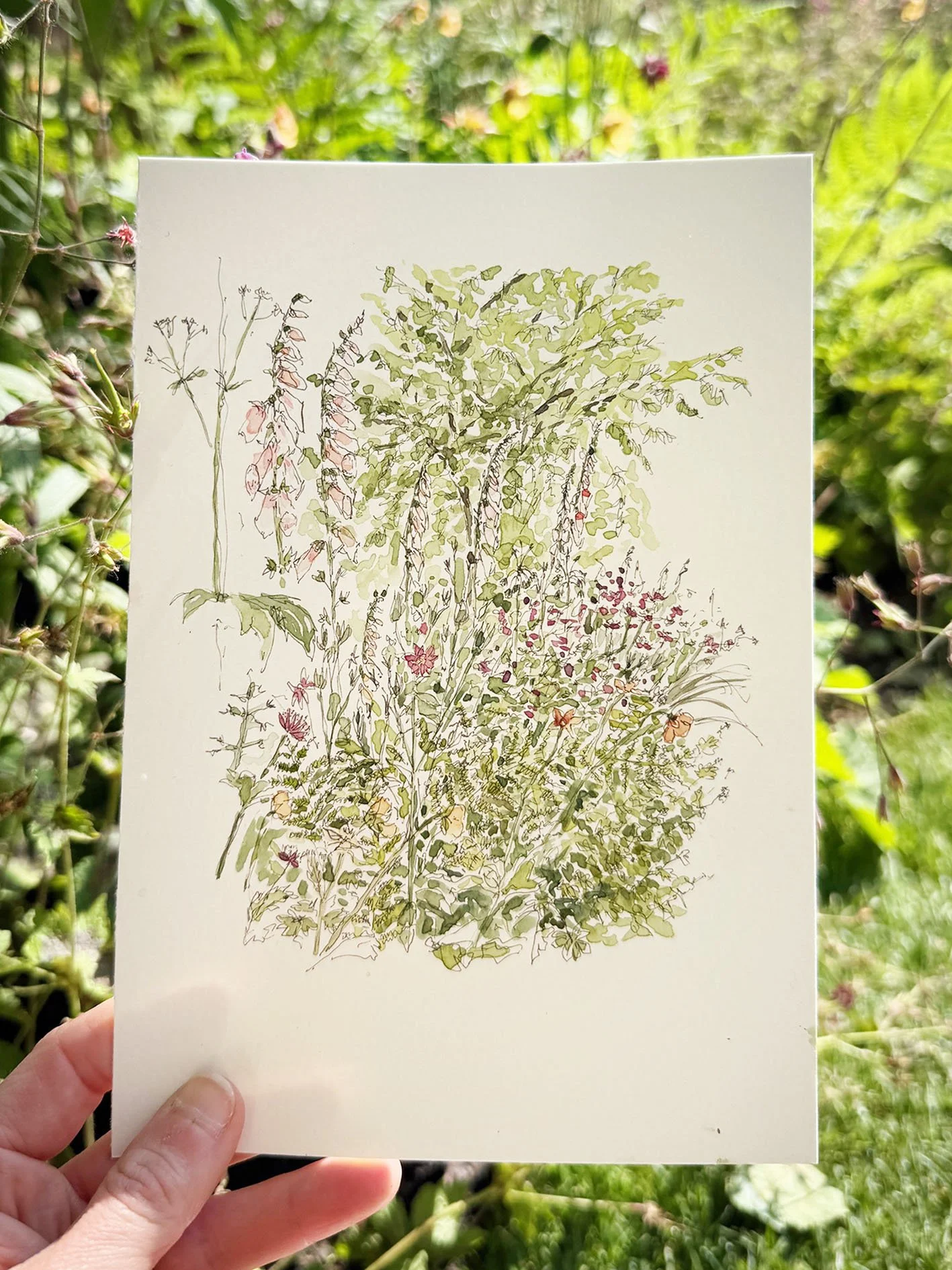
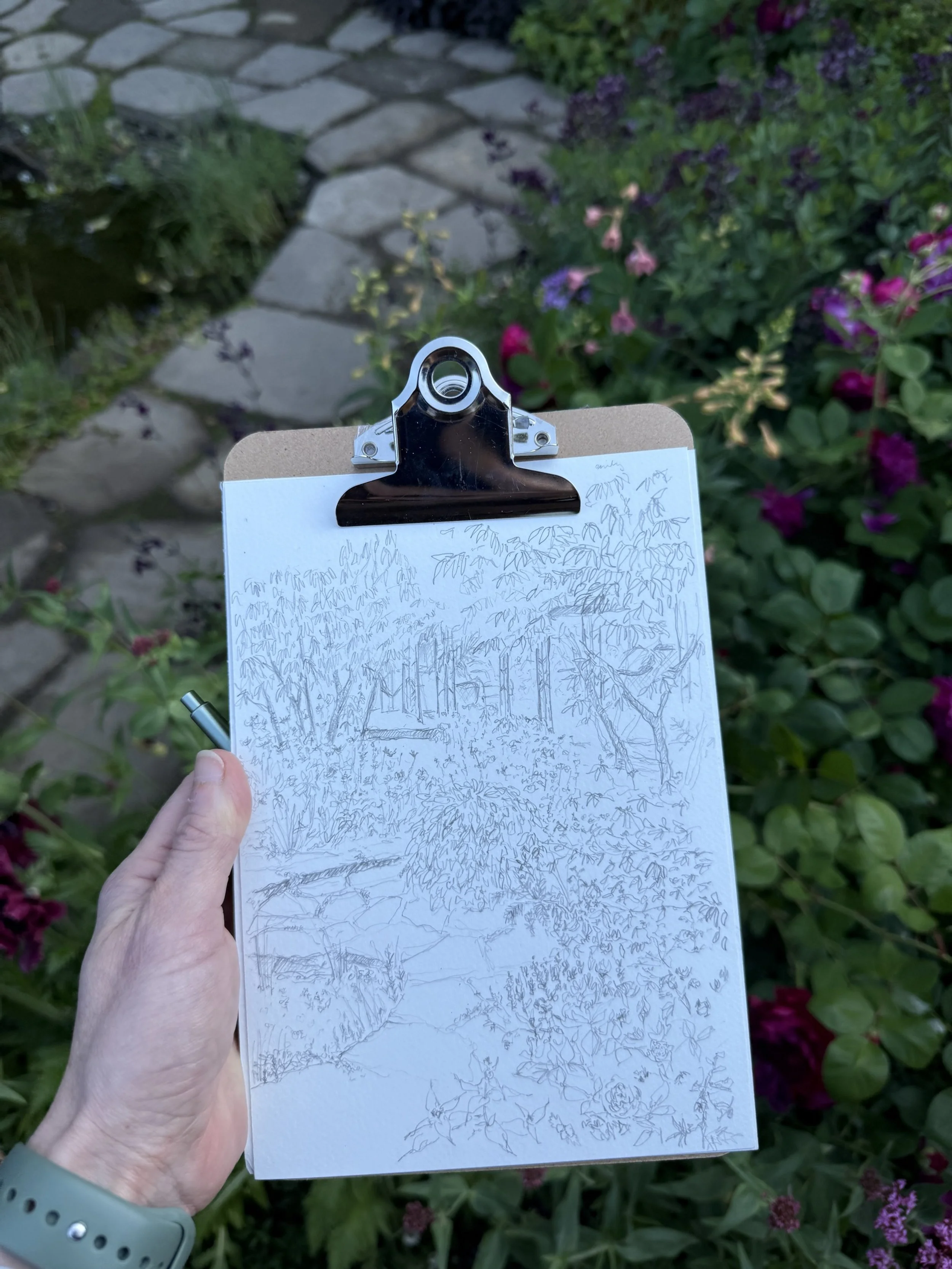
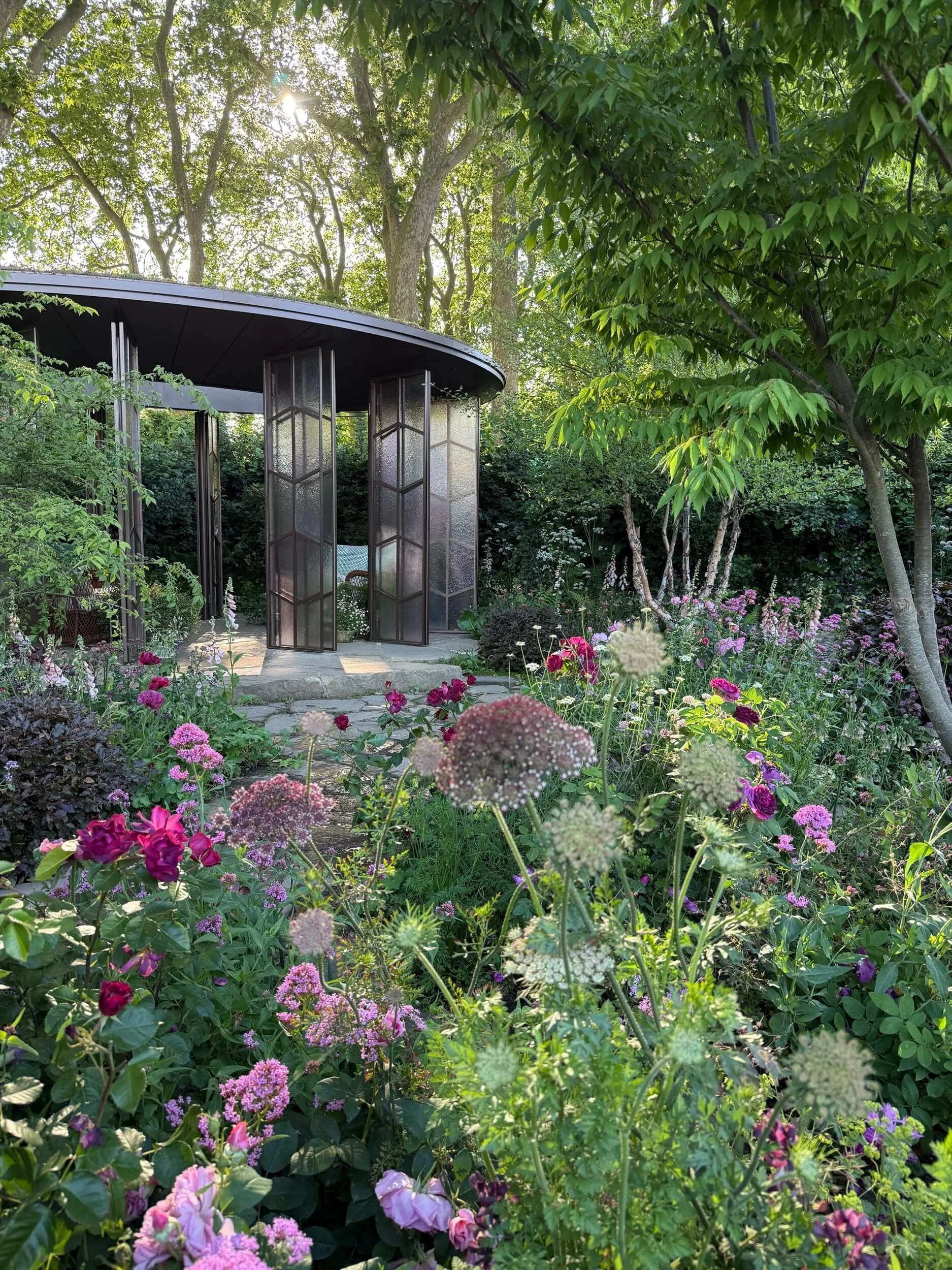
The first garden I came to was The Glasshouse Garden designed by Jo Thompson with beautiful pavilion by Hollaway Studio. I spent a long time with this garden, so much so that it has its own dedicated blog post where I go deeper into the narrative, structure, and process of illustrating it. I loved it and it’s well worth finding out more about.
If you want to read more about that experience, you can find it here:
Illustrating the Glasshouse Garden
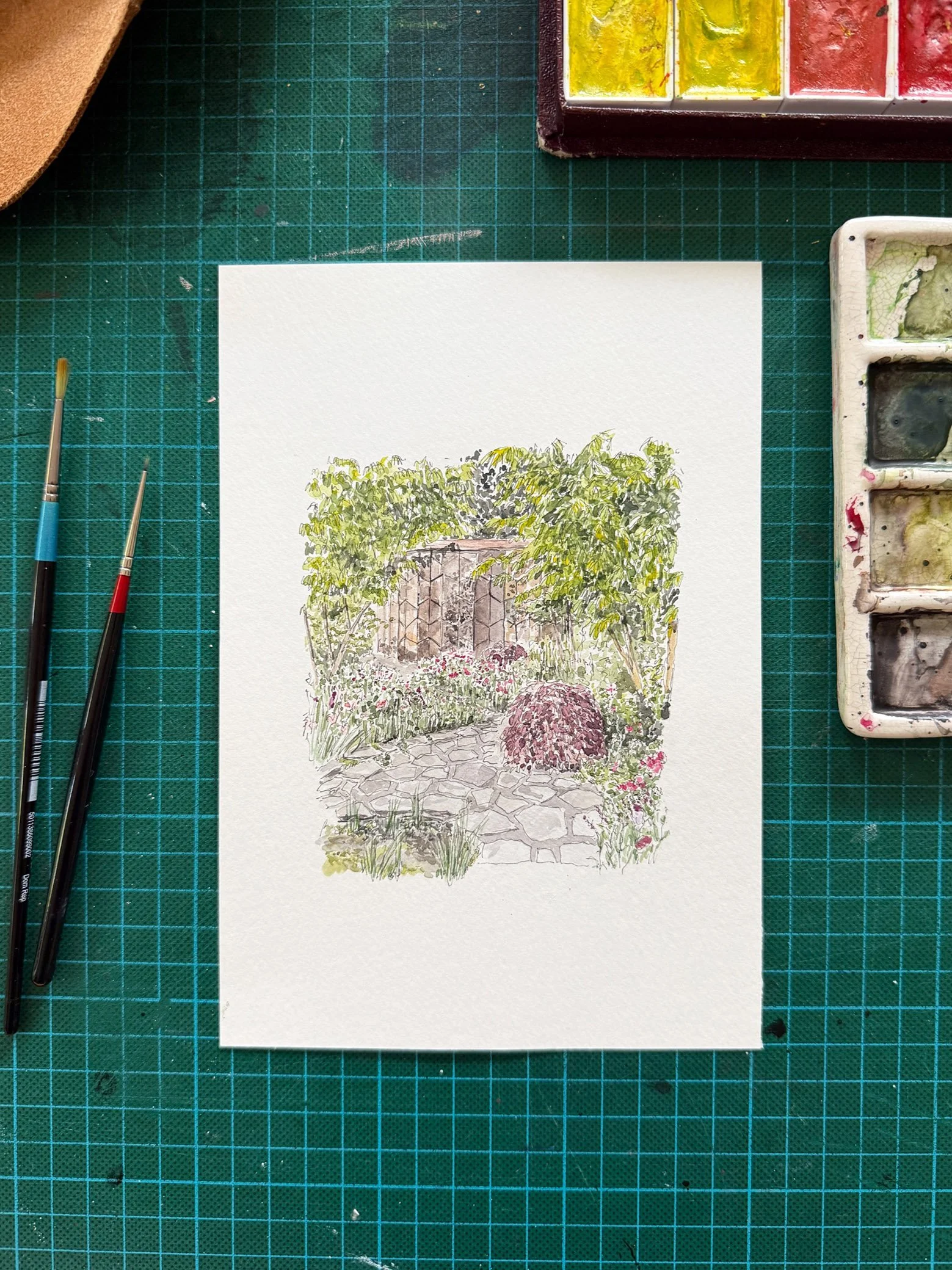
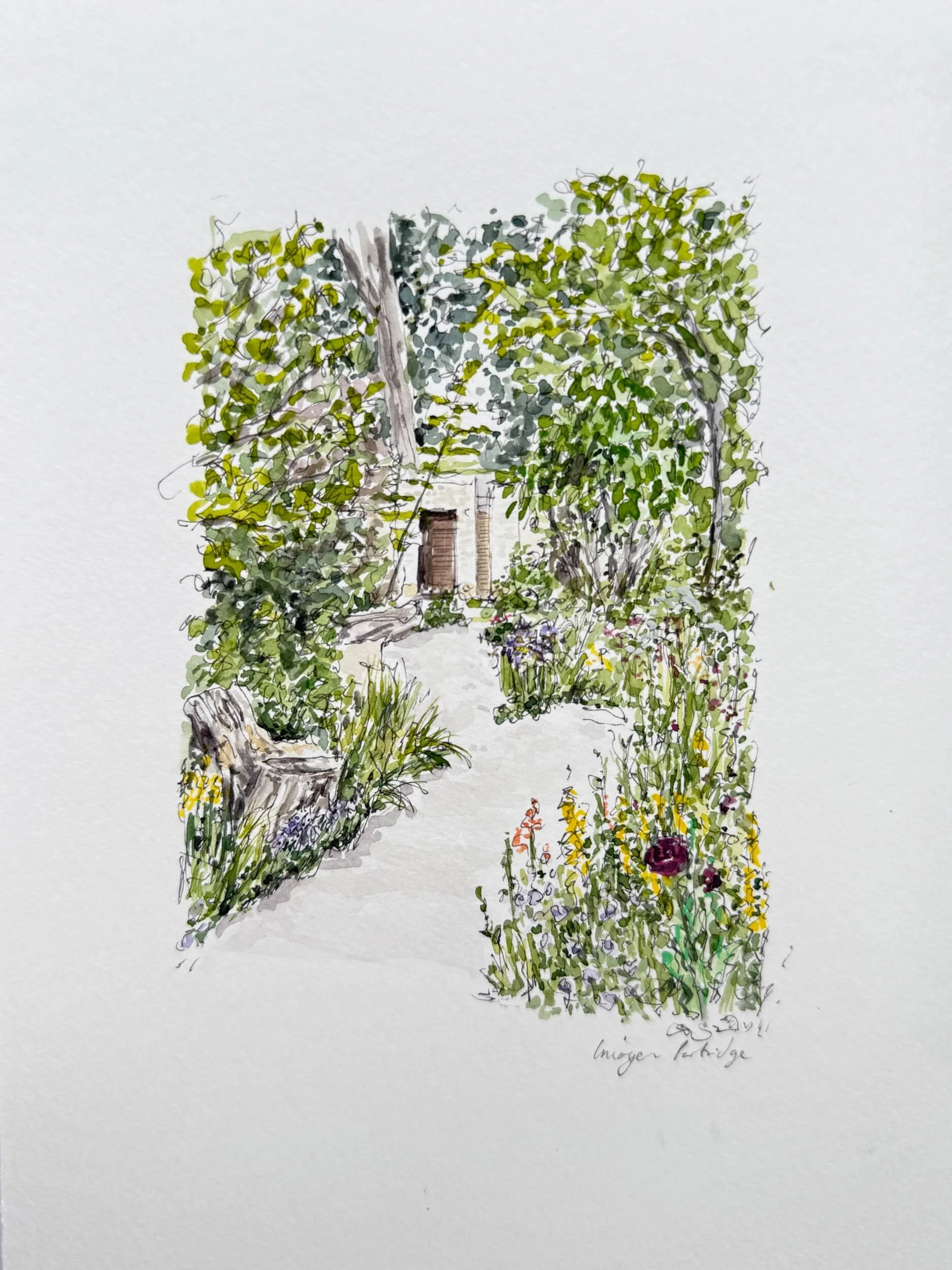
The Hospitalfields Art Garden
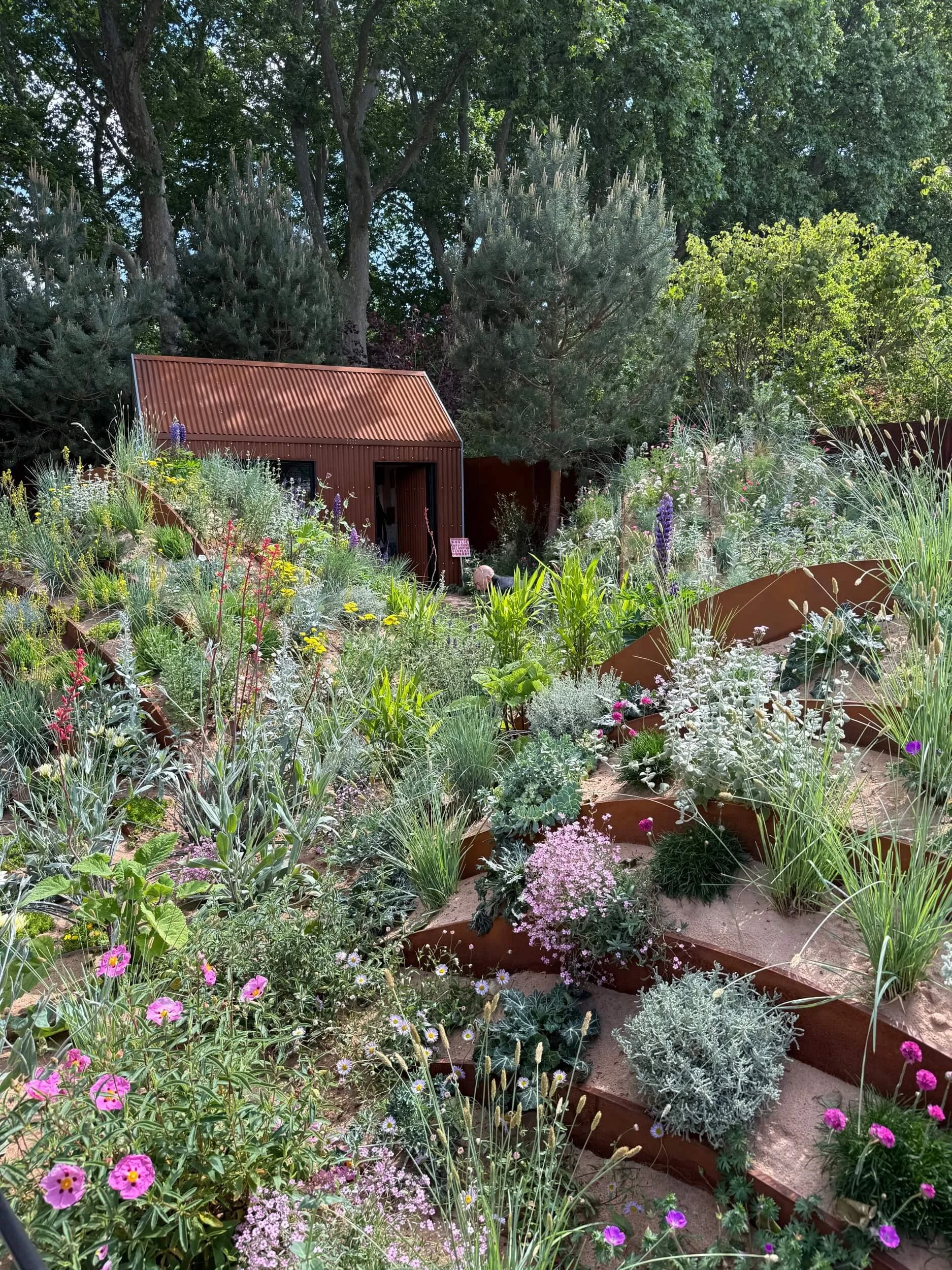
The next garden I settled in to sketch was The Hospitalfields Art Garden, designed by Nigel Dunnett.
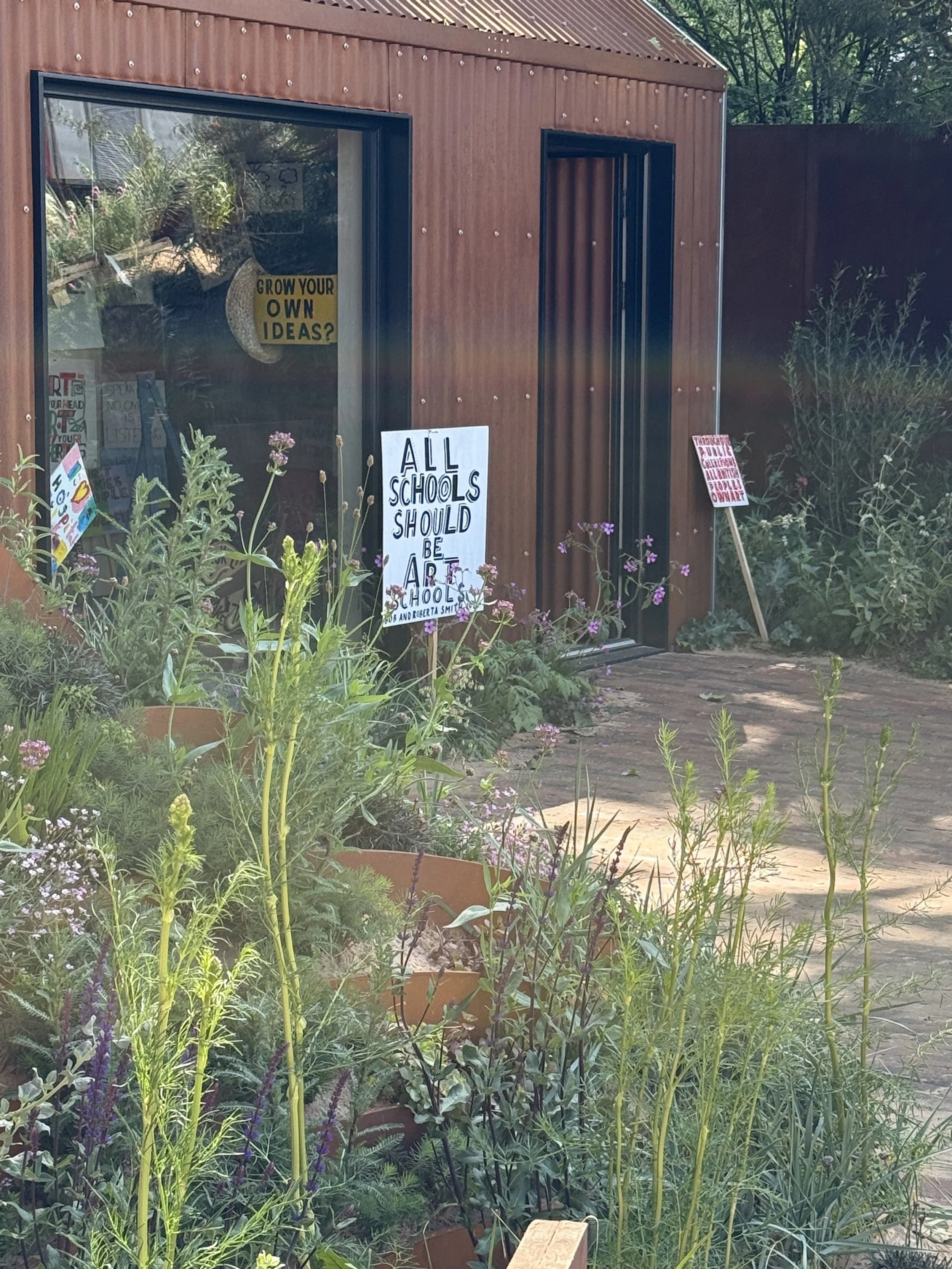
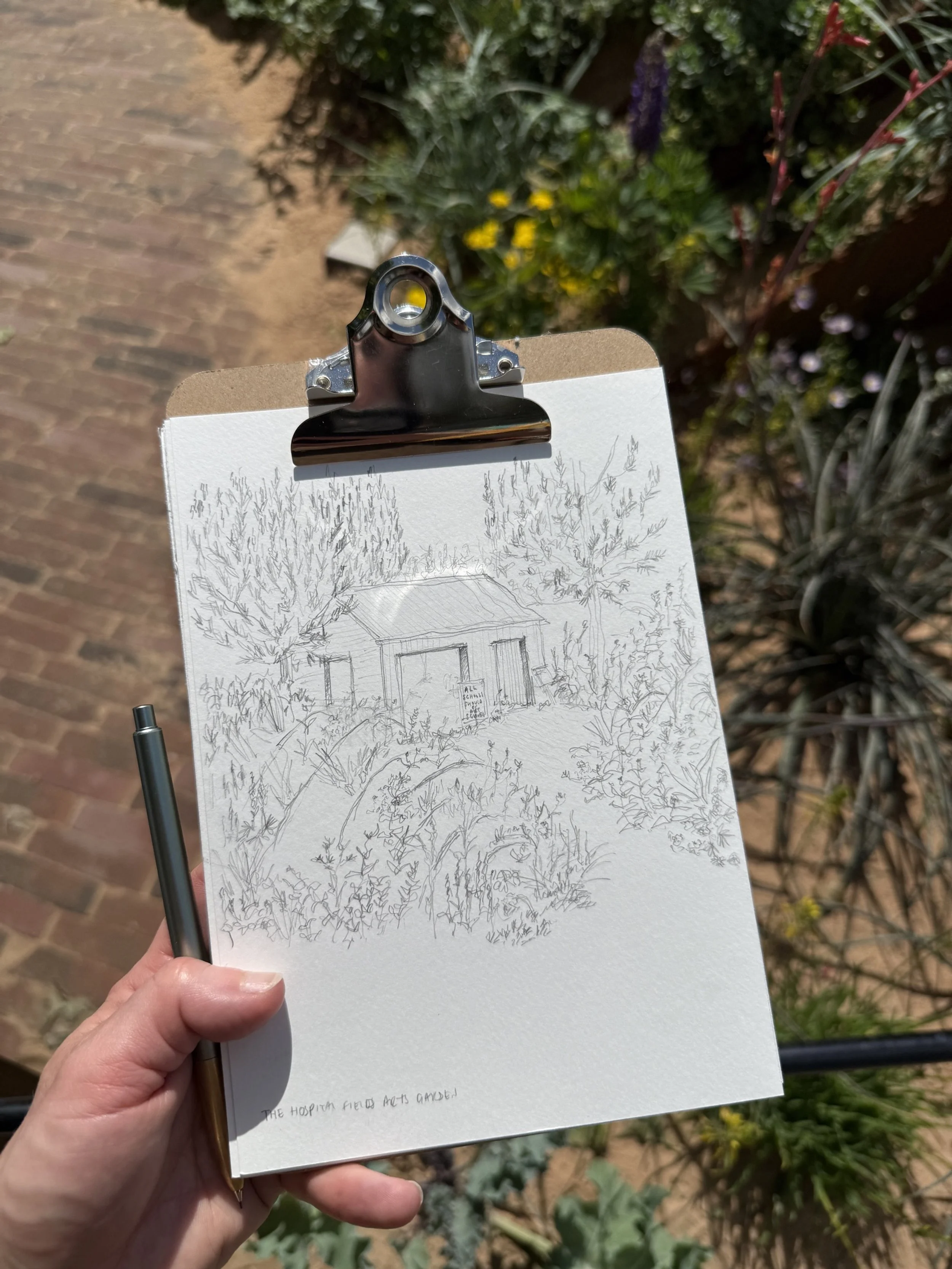
I was immediately drawn in by a sign that read by Bob and Roberta Smith:
“All Schools Should Be Art Schools.”
A sentiment I wholeheartedly agree with.
I loved the concept that it could be a space for artists to create but also to garden (two of my favourite things), but also for group activities like events or performances. It has real diversity of use as well as the diversity found within the planting and design.
As an artist I know I could have spent a lot of time in this space, both the garden itself, creating inspired by the forms and structure, but also in the artists bothy. There was an air of inspirational, invigorating, creative energy that came out of the space and it inspired me with planting for our own garden too.
I’m so glad its legacy home will be at primary school (Ladyloan Primary School in Arbroath, Angus), it feels like the perfect place for a garden that nurtures imagination and creativity.
The ADHD Foundation Garden
I loved the concept of this garden, designed by Katy Terry, all the elements of which were not initially obvious. I love being able to learn about, uncover and understand the layers that go into a design and where the narrative, concept and symbolism comes into play. I think this is particularly pertinent here in a way that people are uncovering, learning and understanding neurodiversity, either within themselves, someone they know or wider society.
I stood for almost an hour by the ADHD garden, talking a little to some of the wonderful team from the ADHD foundation, but mainly drawing and listening.
Listening to people bringing their own experiences, those of children, family members or friends who have experience with it was fascinating.
From the beautiful stories of brilliance and delight from people who have learned to find their way in the world and harness their talents and individuality, to the man who said ‘but ADHD is just hyperactive little boys isn’t it’. To which I resisted the temptation to jump in with my probably somewhat limited knowledge and correct him (thankfully someone else did).
I was listening to one of the team explain the ADHD garden and all the thought that gone into the design narrative and the representations of the different elements. Understanding that just enhances the beauty and the impact of what has been created, but I think beyond that, the point of it all was how wonderful it was to be around these conversations. For the garden to be inspiring people to talk about ADHD, to listen to others talking about it and to share stories in different ways to connect to the garden. It felt like a real privilege to have a short window into that and I’m very glad this garden exists.
The Avanade Intelligent Garden
I was really interested in Tom Massey and Je Ahn’s Avanade Intelligent Garden. I loved the colours of the planting and was intrigued by the way the concept combined technology with environmental care. Using AI in a garden could easily be seen as a gimmick (and I had environmental question marks in my mind) but hearing from the team changed my perspective a little.
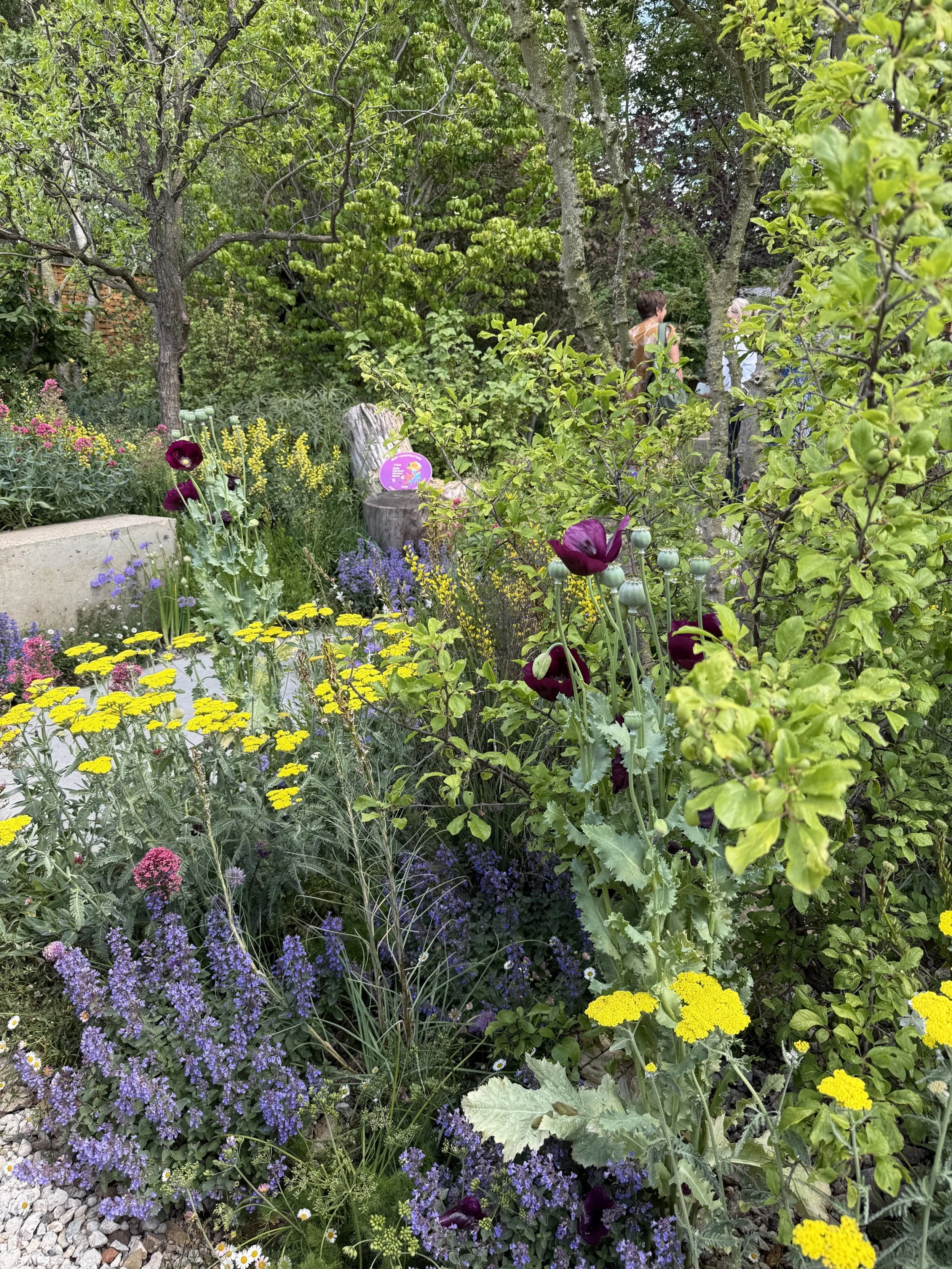
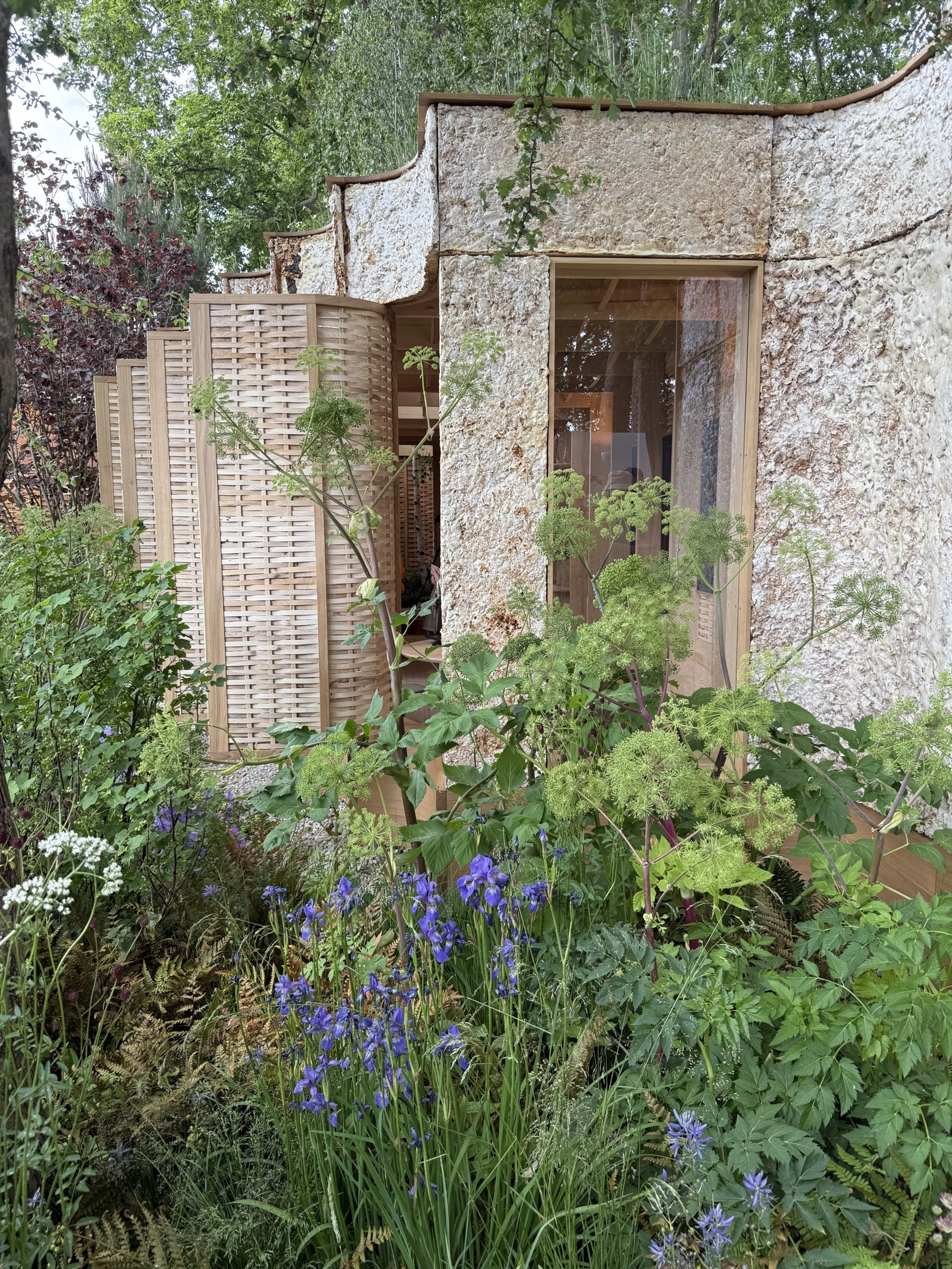
They shared that around 50% of urban trees don’t survive past 10 years and up to 30% don’t even make it through their first year.
Urban projects often choose trees for appearance, not suitability, and they’re rarely cared for with long-term thinking. The garden’s whole concept centred on using data from soil, environment and tree health to suggest small actions that help those trees thrive.
Their pavilion was fascinating too, built using mycelium (said to be a carbon-negative material) and ash from trees felled due to ash dieback. I’m still sceptical of the term “carbon negative,” but that’s probably due to my limited knowledge and this was a great way to learn a bit more.
What struck me most was how successfully this garden started conversations. People were intrigued, questioning, debating, and that’s exactly what exhibitions like Chelsea are supposed to do.
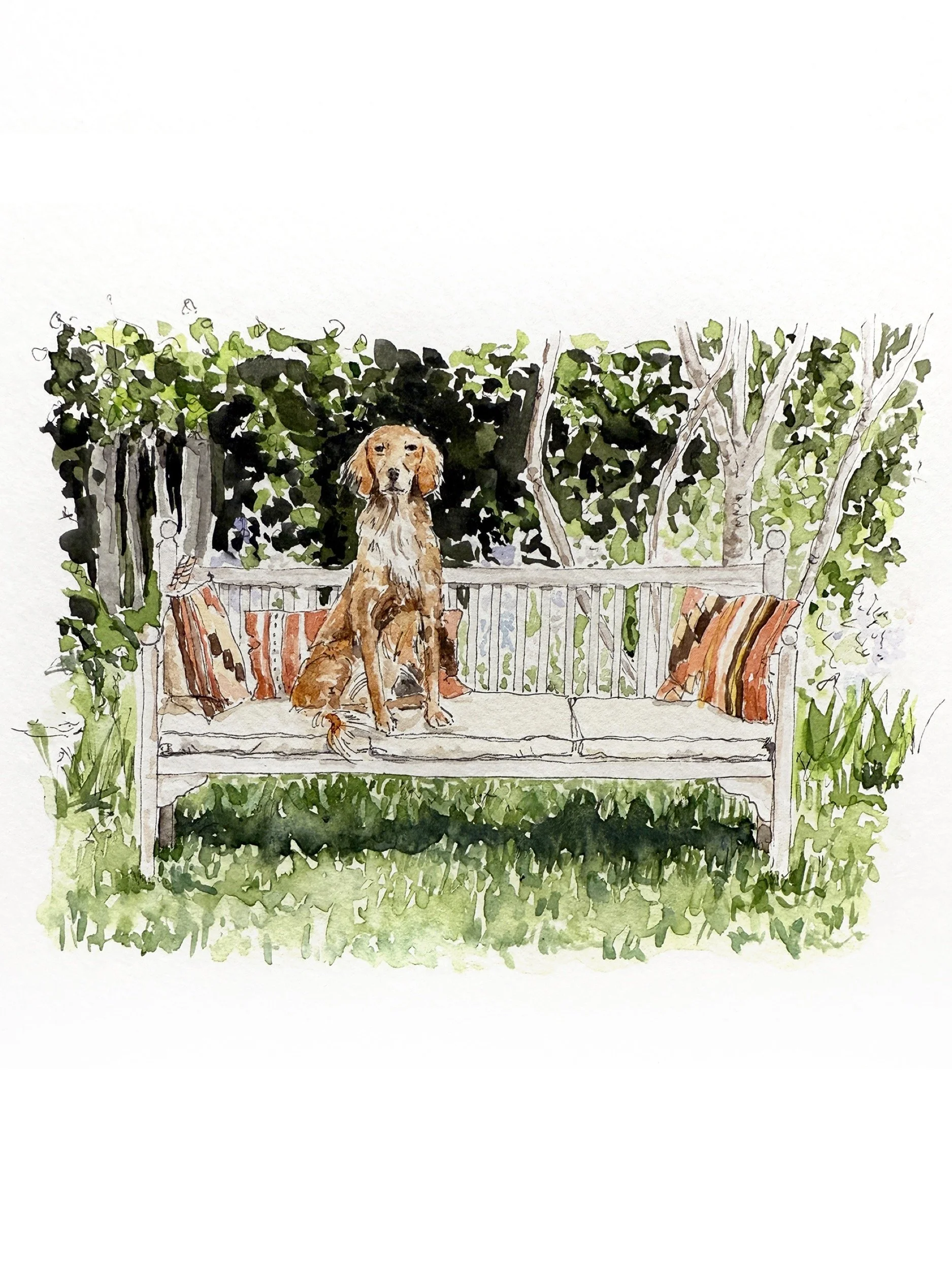
The Dog Garden
This was by far the most popular garden I saw. At every time of day it was a few people deep at all angles… and that’s not even when Monty Don was in the garden (the crowd for that you could barely get a look in!).
Because of this, I didn’t get the clearest look at the design. When you’re seeing only snippets between clusters of people, or the garden surrounded by the crowds like a fishbowl, it can be hard to appreciate the full space. But from what I did see, I really liked it, and I loved the concept.
A garden celebrating the relationship between people and their dogs, while also supporting biodiversity, felt joyful and grounded in real life. Even in the crowds, you could feel how much it resonated with people (the garden and the Monty Don fan club).

Why Illustration Matters at Chelsea (and Beyond)
Illustration, drawing, sketching and painting are wonderful. They slow you down, allow you to notice, it draws people in, sparks emotional connection, it’s human storytelling and a different kind of beauty. It encourages people to look on a different level, a deeper ‘seeing’ and another perspective. It invites some imagination too, it’s not just a photograph, it’s an invitation to feel, experience and remember the space in a different way.
For brands, garden designers, sponsors or event organisers, illustration can:
– Bring your concept to life
– Document your garden in a unique, memorable way
– Create engaging social content
– Produce meaningful gifts for collaborators
– Offer live on-site sketching for visitors
– Capture the energy of the space in a way photos can’t
If you're creating a garen, for Chelsea, a client or yourself, I’d love to chat about how illustration can enhance the experience at different stages of the process.
Looking Ahead: Chelsea Flower Show 2026
I would love to return to Chelsea next year to document this years gardens, speak with designers, learn, be inspired and create a curated series of sketches across the week.
If you are:
A garden designer
A brand exhibiting
A sponsor
An organisation wanting illustration
A press or media outlet
…I would love to collaborate.