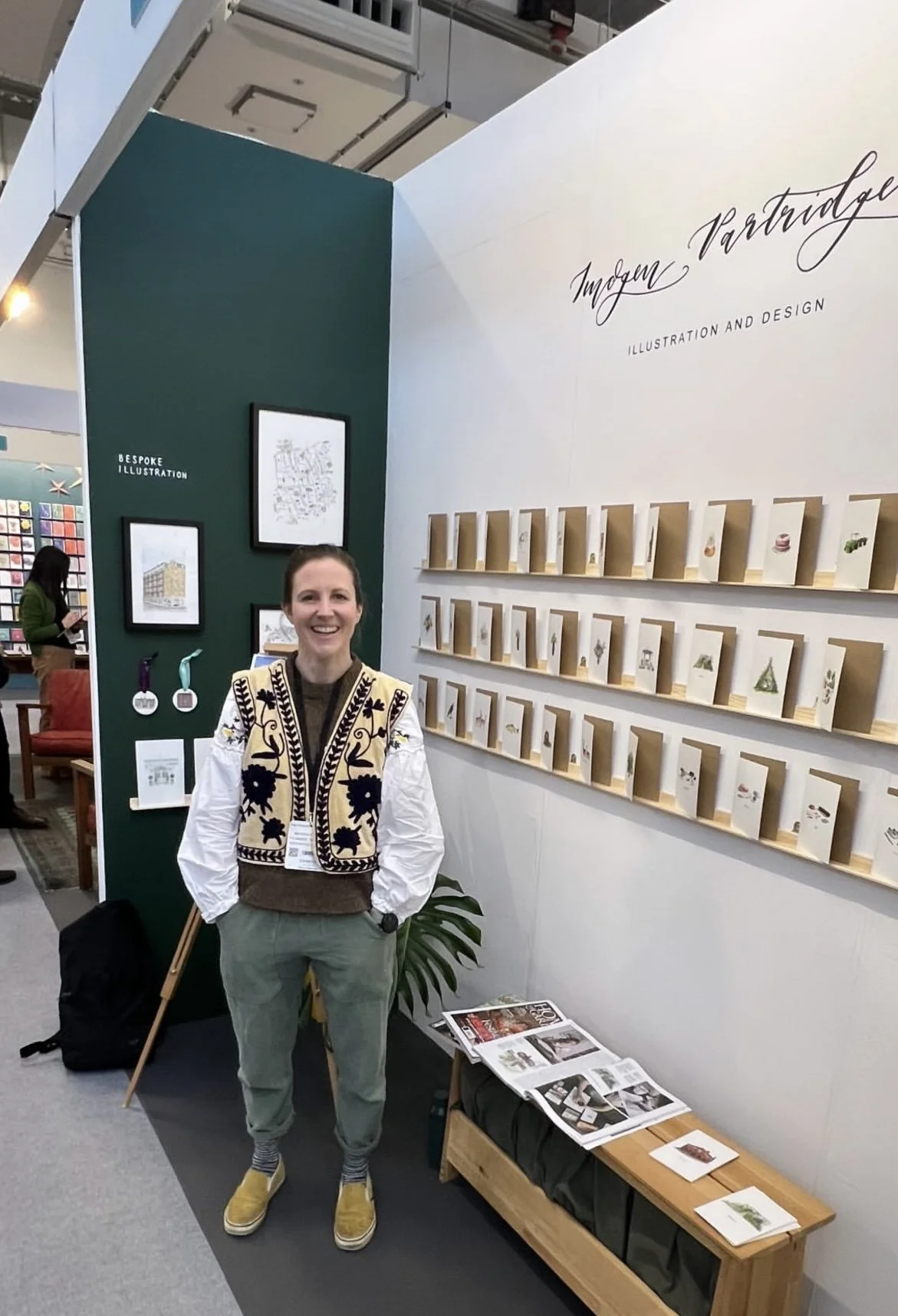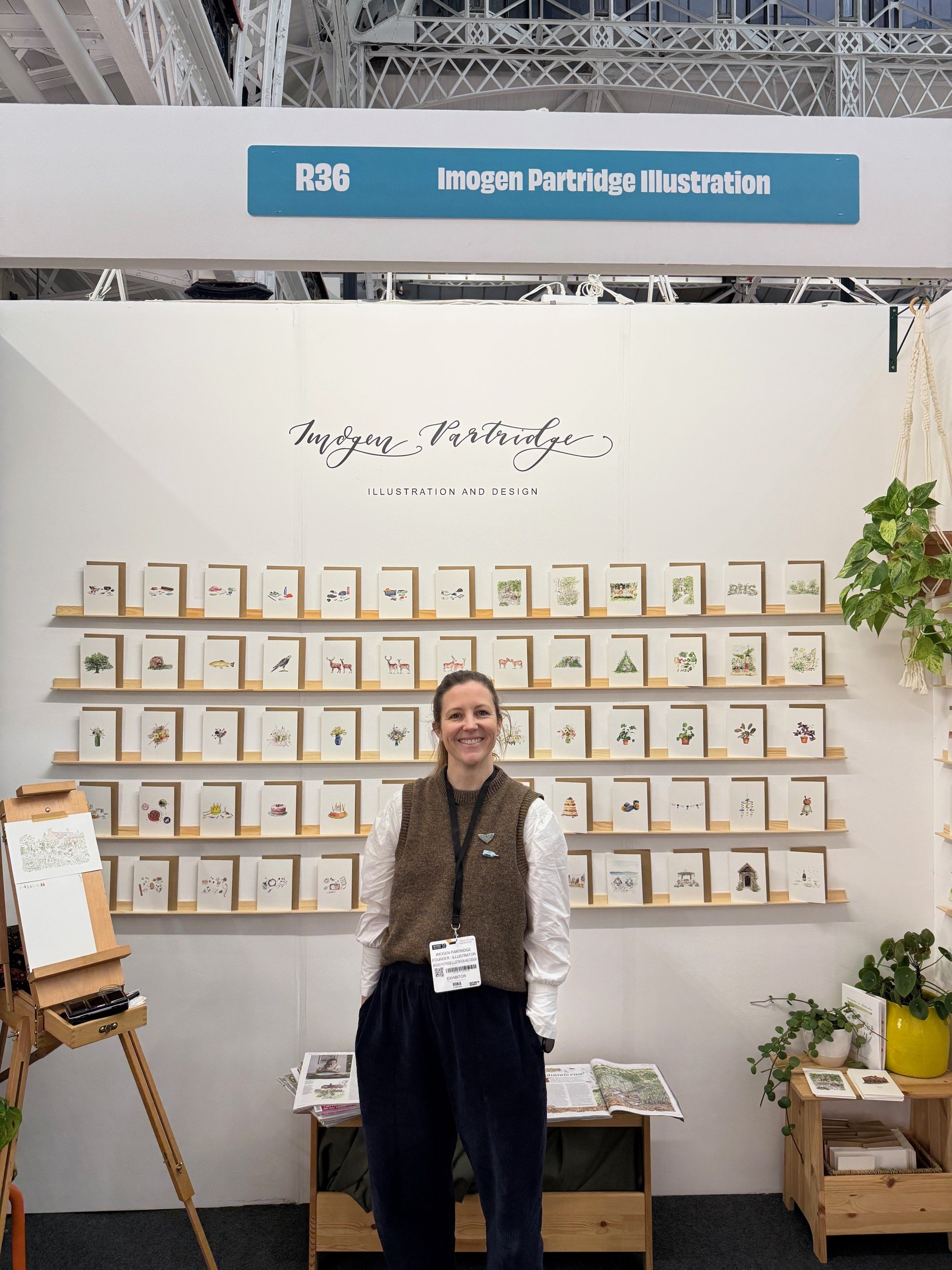

In January ’26 I exhibited at Top Drawer London for the second time. Driving back from Olympia after setting up my stand, I found myself thinking about not just the show itself, but on everything that goes into getting there.
Trade shows are often talked about in terms of outcomes, the orders, leads and numbers. But the reality is far more nuanced, especially when you’re running a small, values-led business alongside family life, other client work, and the general unpredictability of being human.
The Run-Up
Top Drawer Spring / Summer is early January. For buyers that could be a lovely start to the year, a day out getting some new inspiration. For me as an exhibitor it’s A LOT. Straight after Christmas and New Year (which is always busy with my son’s birthday around that time too) and the run up to Christmas which basically starts in September, so it’s a busy time coming off the back of a few months of busy times! But it’s possible.
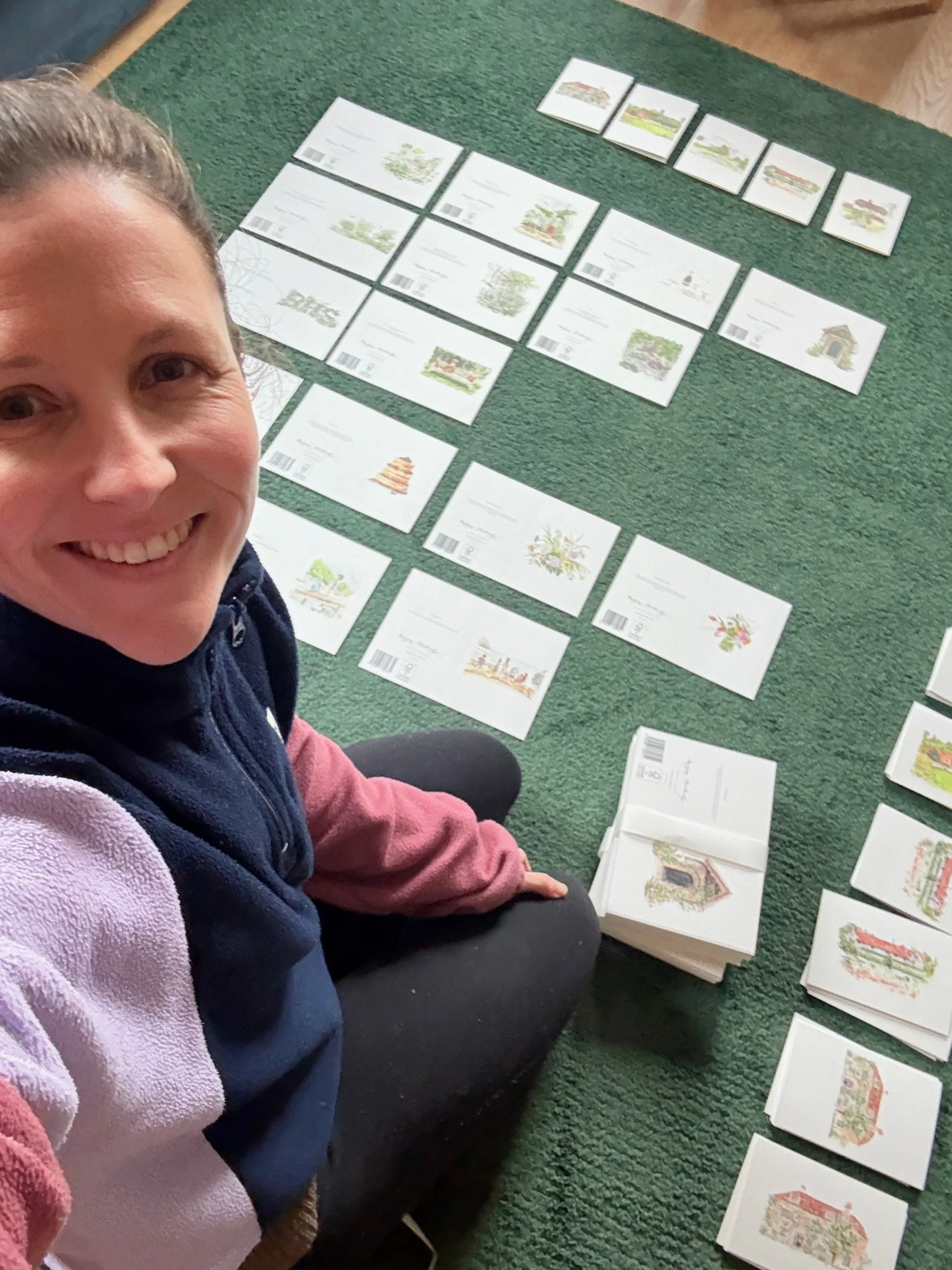
The week before Top Drawer felt particularly intense. I had work commitments so I had planned accordingly, but it was still a lot. School inset days, long drives for work, and settling back into routines, then a FedEx notification to say my card delivery was delayed didn’t feel like what I needed. The cards arrived safely and I managed to get everything packed up in time.
None of this was catastrophic, but all of it combined meant I arrived to set up at the show already tired, overstretched, and very aware of how much emotional and physical energy these things take!
A trade show is an undertaking for anyone, neurodiverse or not, and I think it’s important to acknowledge that when we talk about exhibiting!
The Set-Up
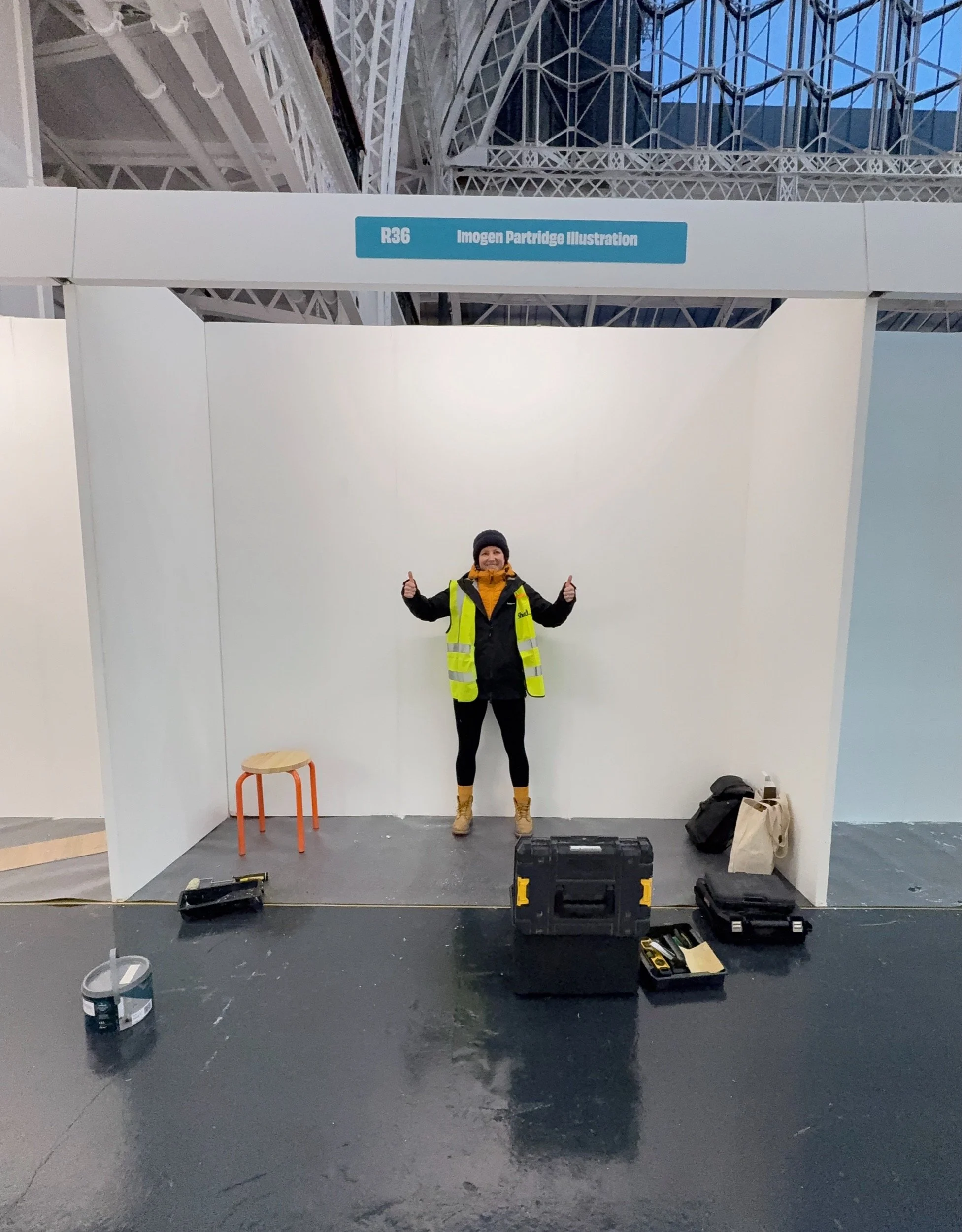
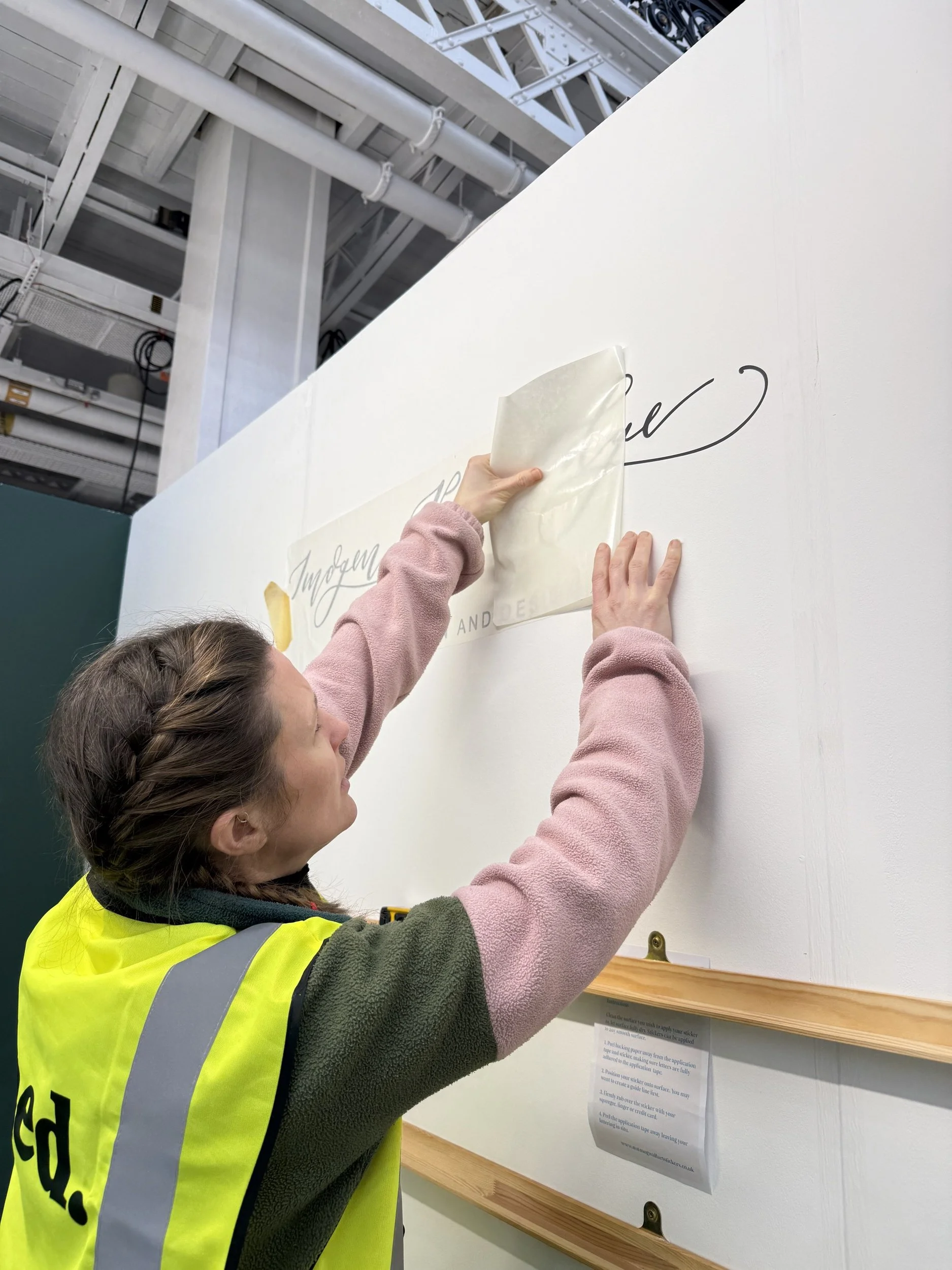
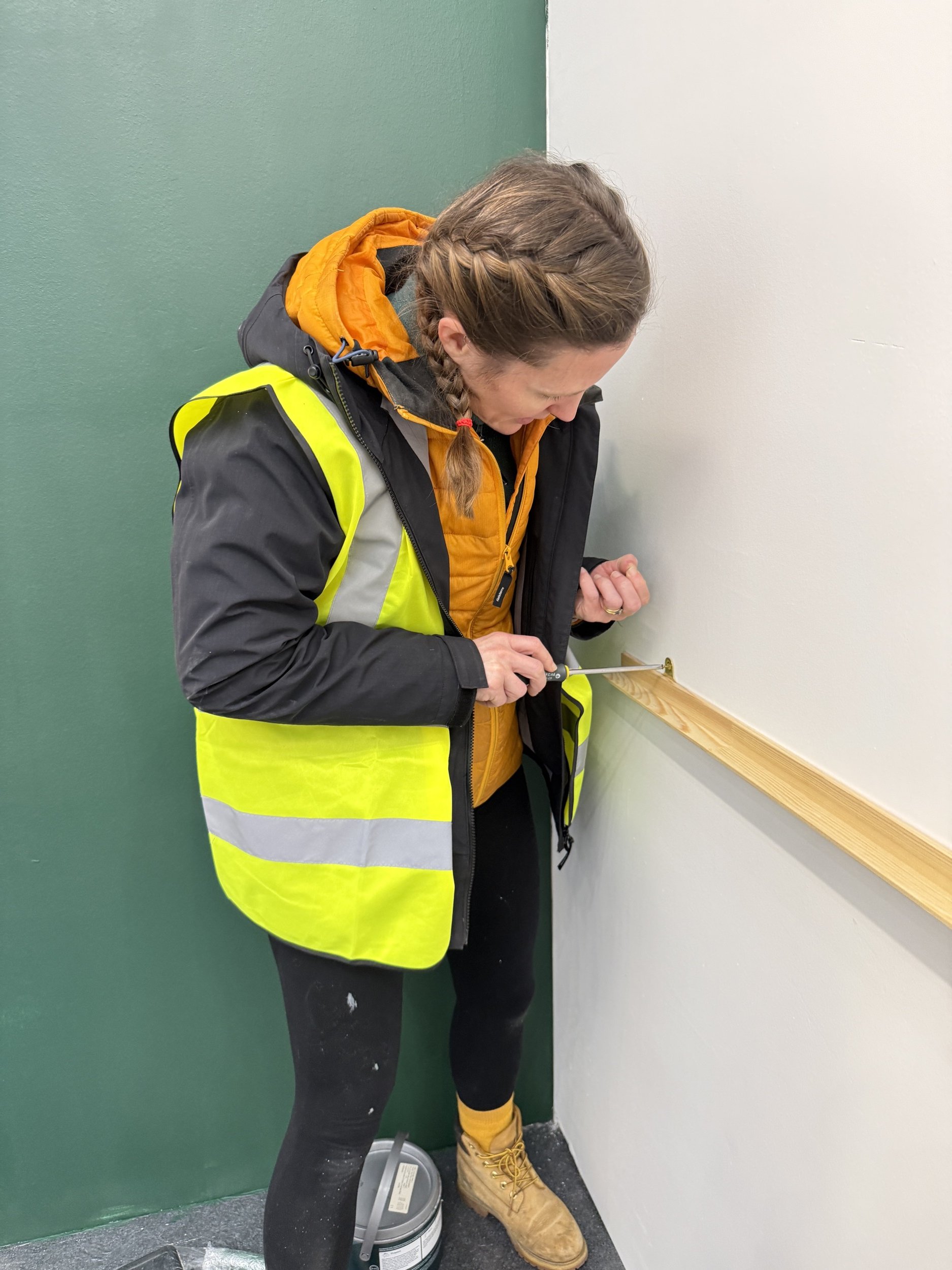
My brilliant husband came with me to set up and I’m so grateful to have a second pair of hands and more importantly a second opinion. I could physically manage it myself, but it would take me SO much longer and be far more stressful I’m sure.
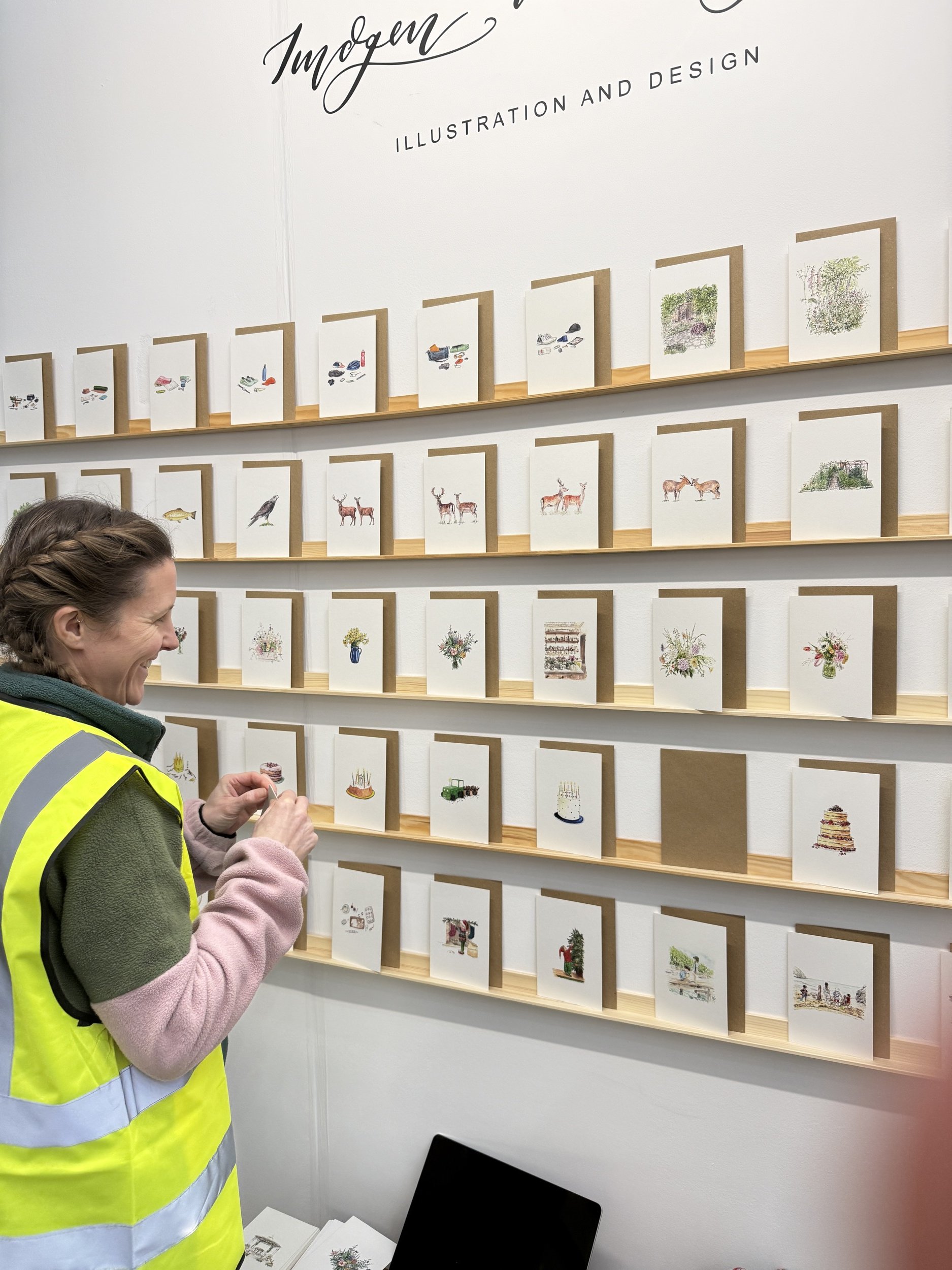
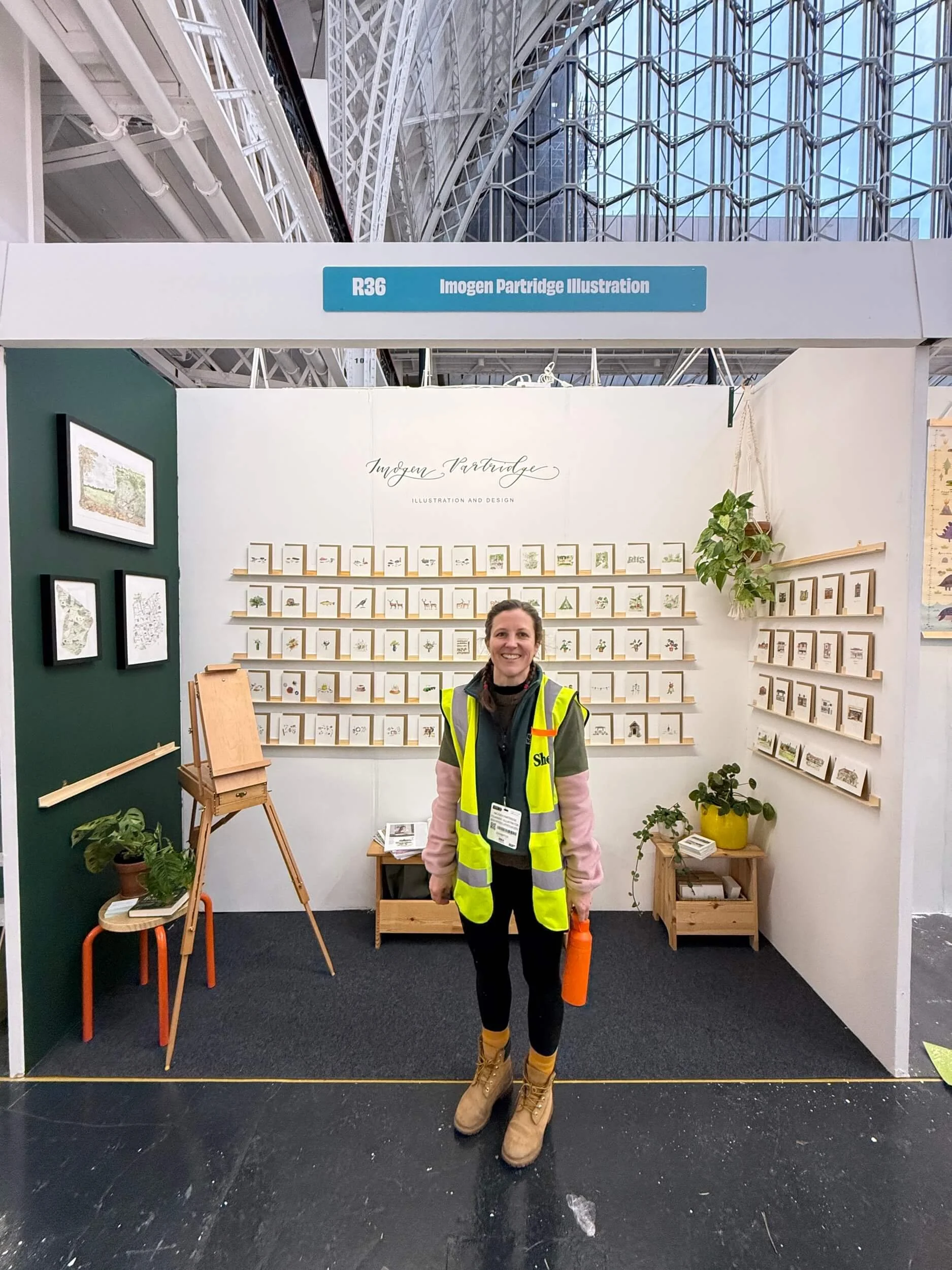
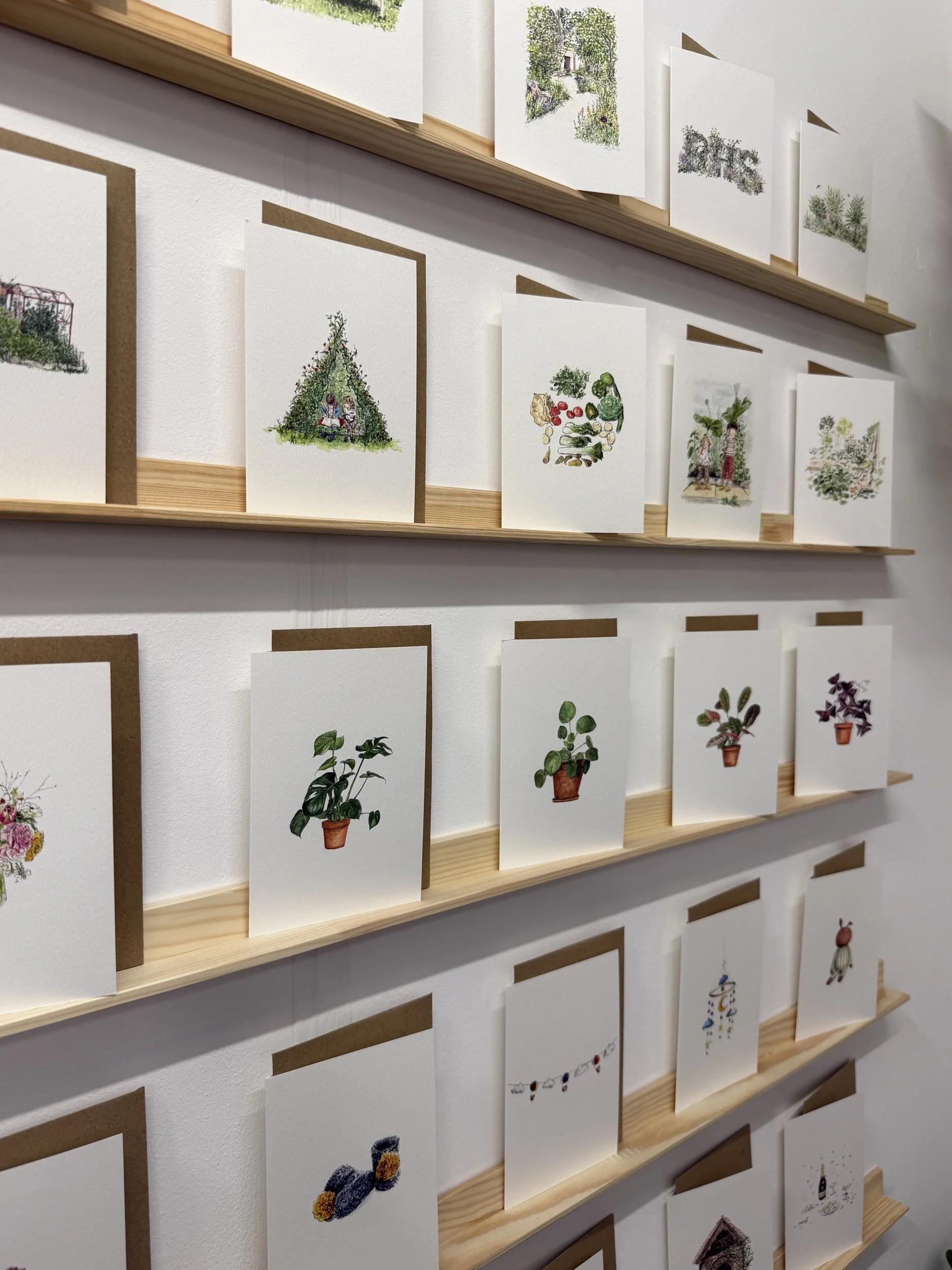
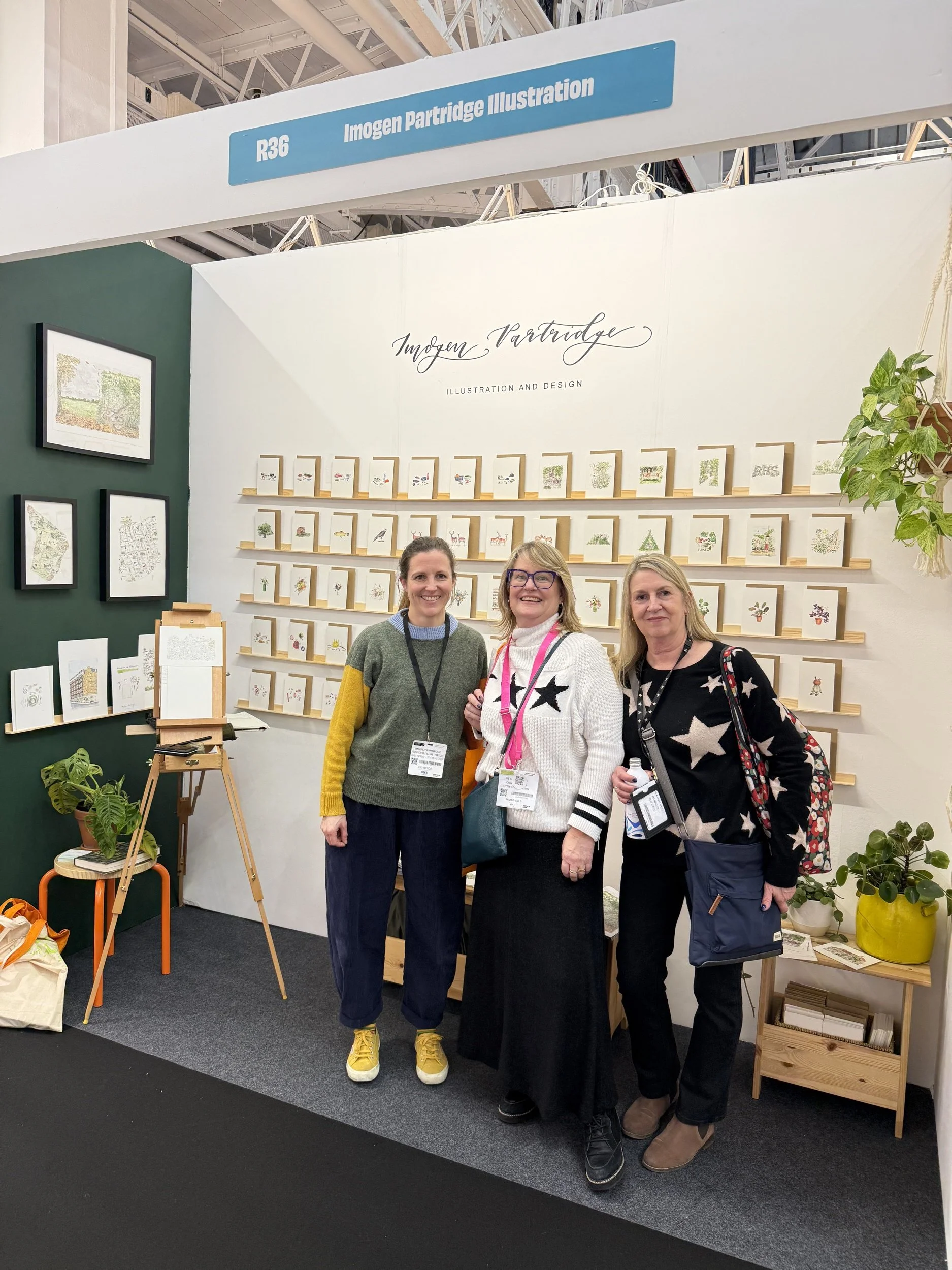
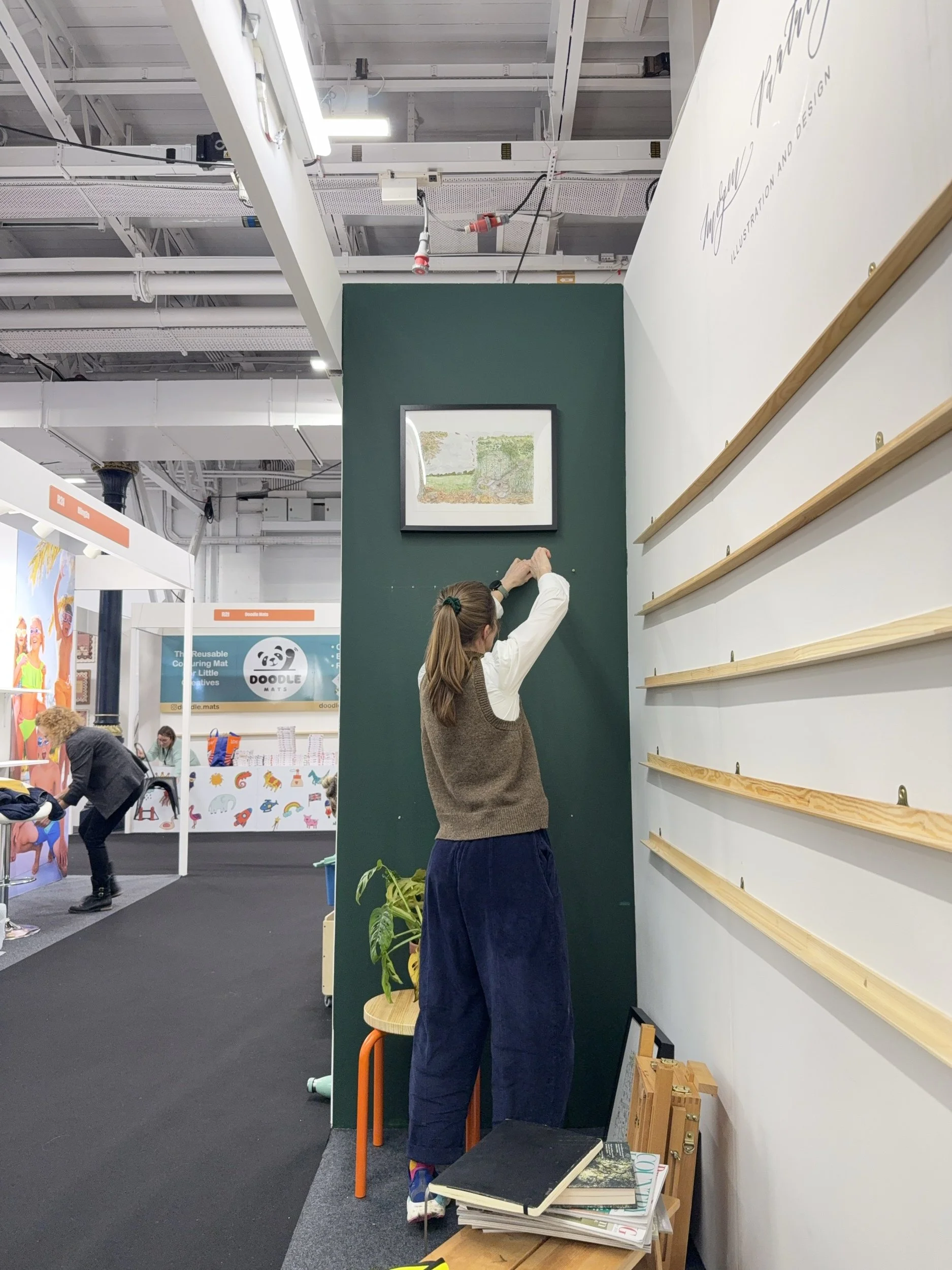
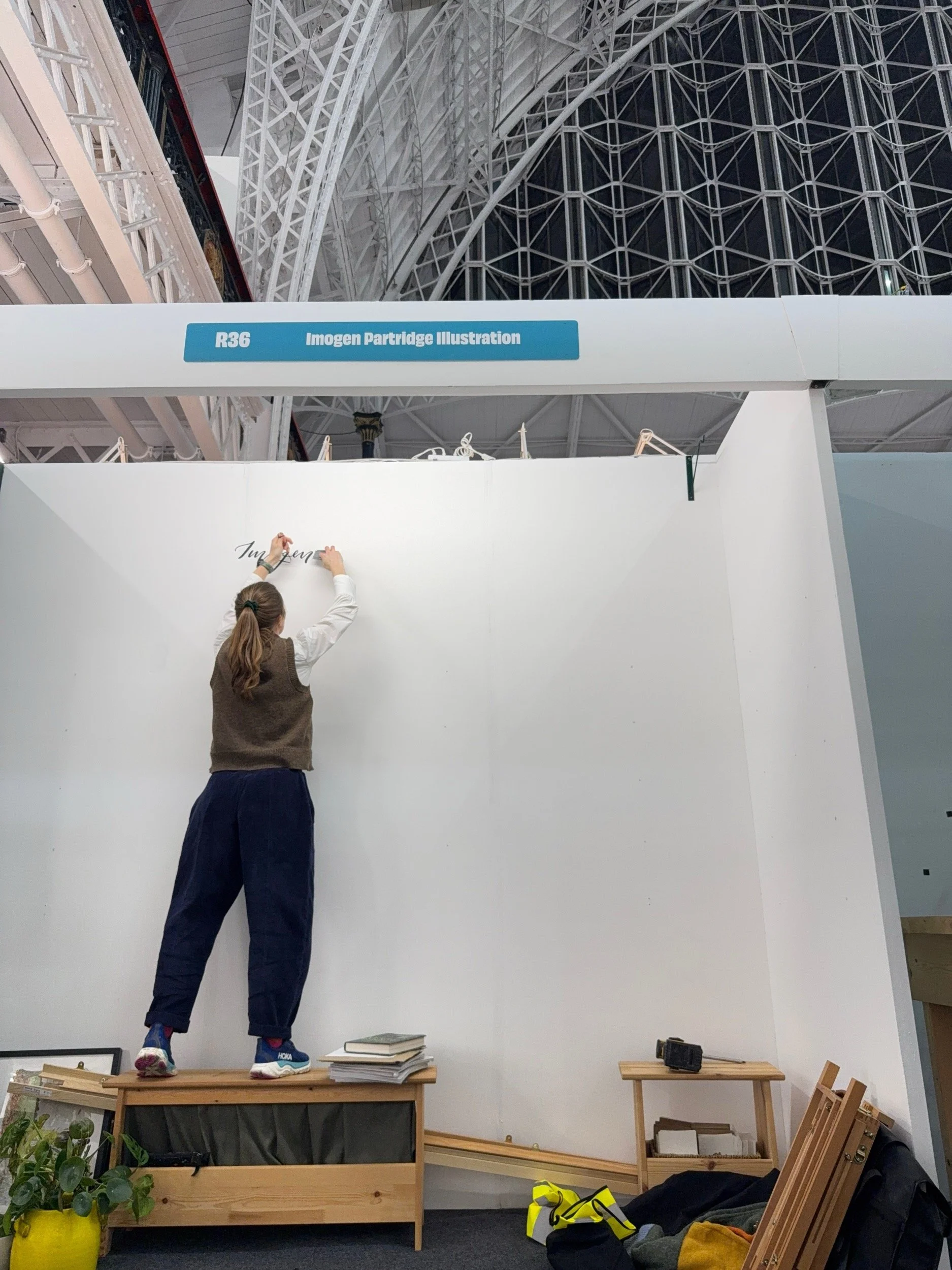
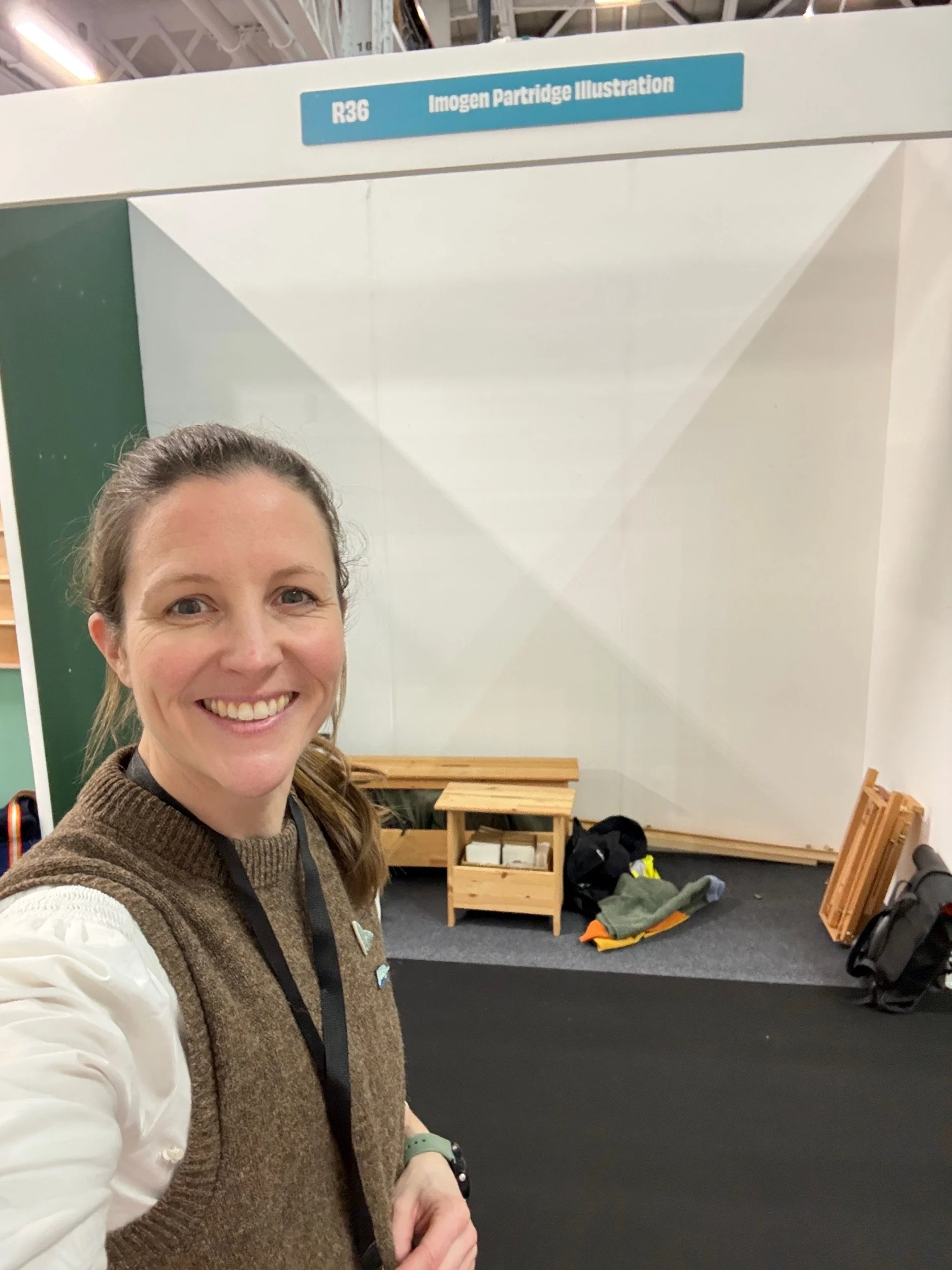
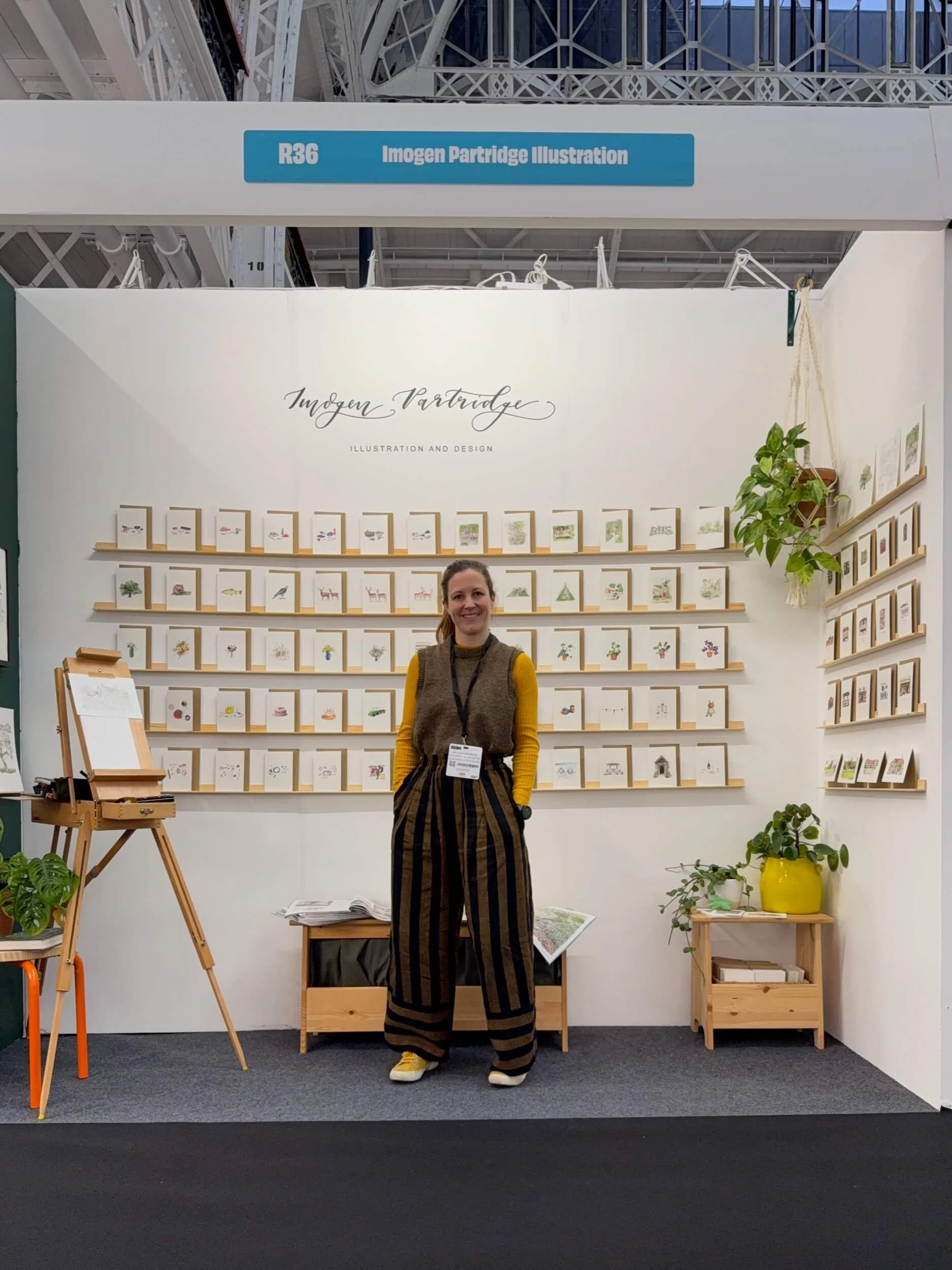
I kept it simple and had the same setup as last year (my first show back in 2025 which you can read more about here) just with a couple of extra shelves. Thankfully my branding is quite clean and simple so the stand can reflect that and it keeps it easier too. I did think that if I did more trade shows in future, having a shelving system you can reuse would be a good investment. Ready made frames / shelves that could be hung or screwed onto the wall, rather than measuring each out and putting them up individually. If you’re thinking of exhibiting I’d definitely look at how many trade shows you’re planning and where you want your time and money to be spent.
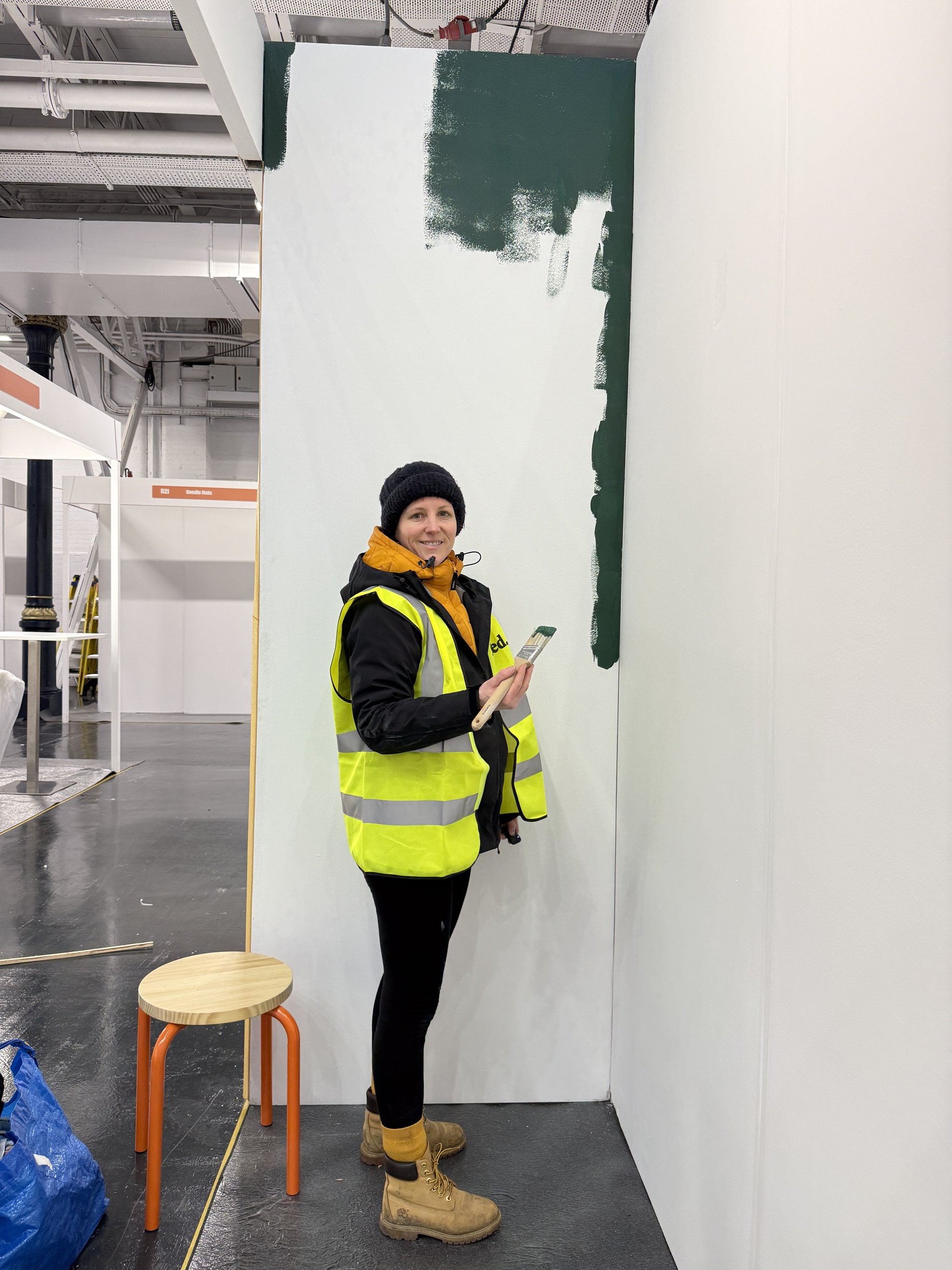
My stand was the same size as last year a 1x3m stand, so pretty compact but just what I need for now. I painted one wall panel which costs £10 (per wall panel) if you let them know in advance (£40 if you don’t, so make sure you don’t get caught out). I included the same props, some of our house plants and a long and short bench, one which I stapled a curtain to hide my stuff. I travelled in on the train each day so had a rucksack, coat and essentials (mainly snacks) to hide away neatly. Then in the other one I kept spare postcards and business cards in a little basket which I didn’t mind being on display.
I also took some of the magazines I’ve been featured in, a suggestion last year from PR friend Pippa of The PR Set, which I used again (and hides some of the child-made marks on the bench!).
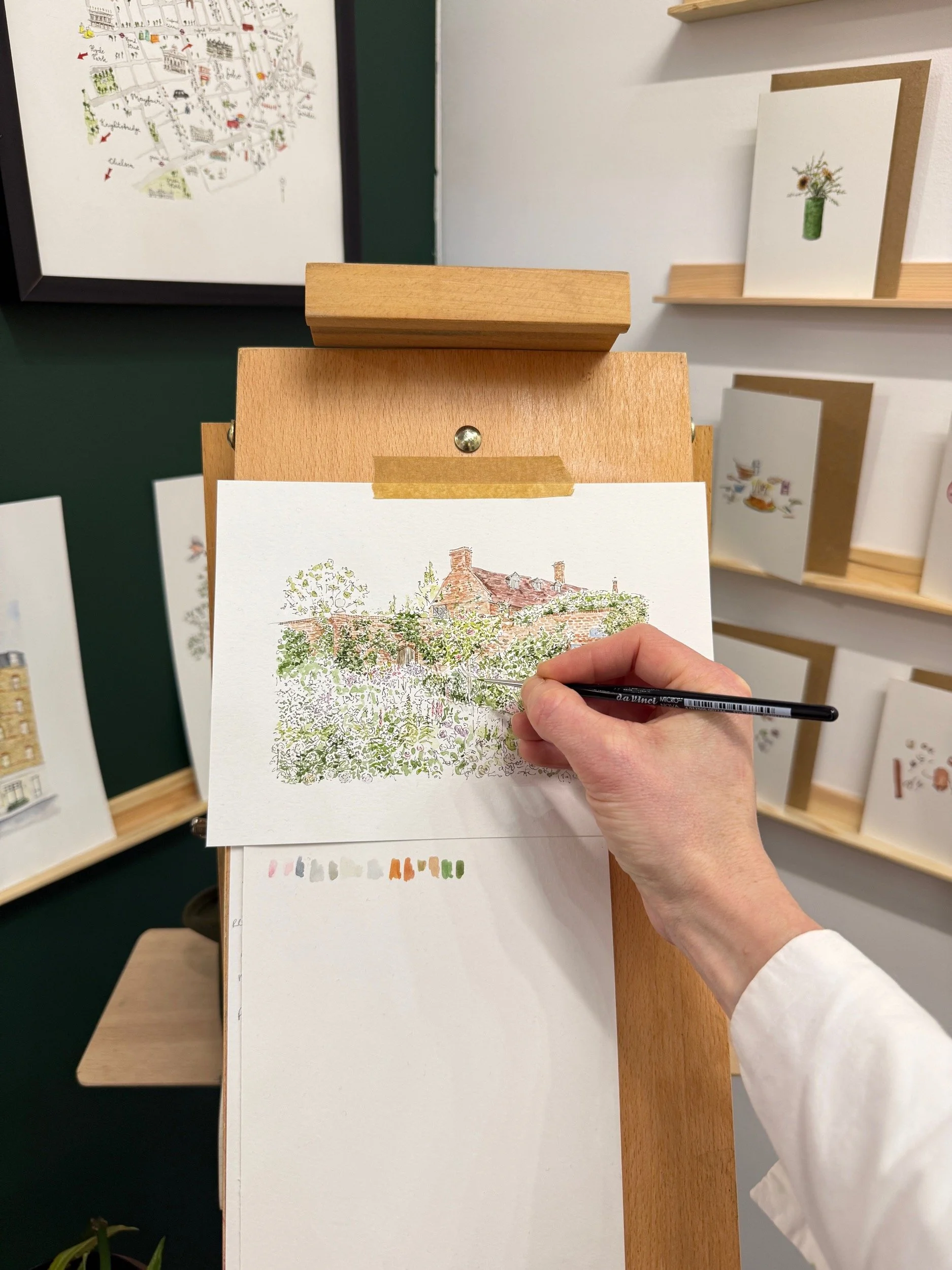
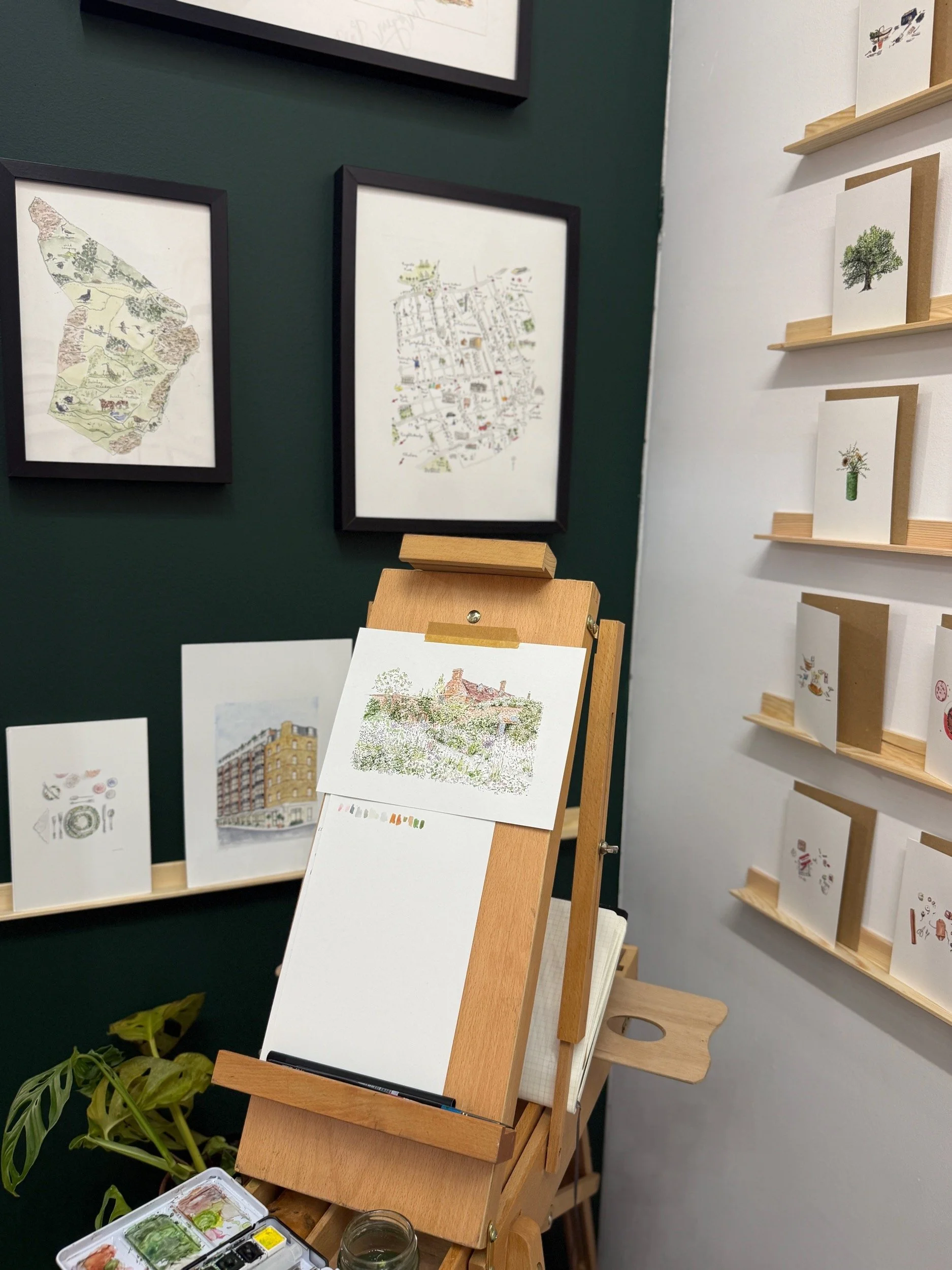
Finally I took my easel so I could do a bit of painting during the show. It’s a great way to really show people that I paint these myself by hand, it gives me something to do in quieter moments and is a talking point - people love to watch someone at work and come and see what’s I’m doing.
The Familiar Doubts (thanks brain)
As with most things that push me out of my comfort zone, I doubt myself. I was so worried before hand of not having ‘enough’ new work, that my collections weren’t cohesive enough, should I even be focusing on wholesale at all. Greeting cards are a hugely saturated market with tight margins, and for many people they are the entirety of their business. For me, they’re one part of a broader ecosystem that includes bespoke illustration, workshops, storytelling, and community-focused creative work. I didn’t manage to focus much on wholesale last year, but it’s a deliberate focus for me now, but because it makes sense long-term and is an opportunity for more creative play which I’m craving. Yet I look at others for which it’s their main focus and feel like I’m not keeping up or not creating enough!
What grounded me was remembering why I’m doing this. It’s not just about cards, it’s the bigger picture. It’s about sharing my work, my values, and my belief in creativity as something that supports wellbeing, connection, and joy.
Oh and I also worried about my skills and ability. I work hard on my mindset and do really believe in myself and my mission, but when you’re surrounded by huge amounts of talent and really well established businesses, it’s hard to hold your own sometimes. After setting up and the first day there I barely looked around at all. I could tell I wasn’t in the right headspace and being so exhausted probably didn’t help. By the second day I was more settled, perhaps it was having had good conversations and felt real validation, or the confidence of having received orders.
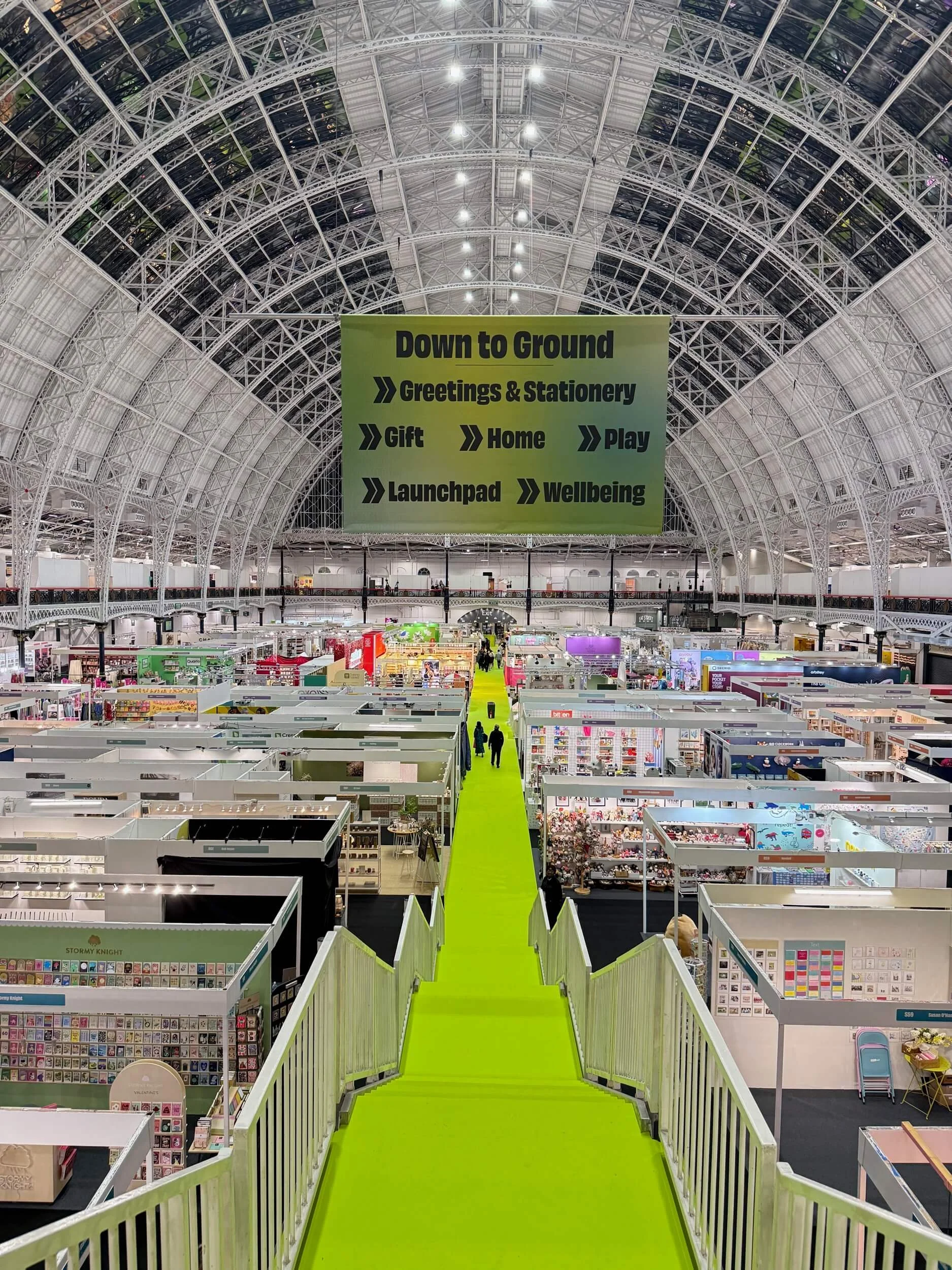
Whatever it was it was good to feel a shift and I was ready to go exploring with a more positive mindset. With that in mind it’s a really inspiring place to visit. There is such a buzz and with such a huge range of designs, styles and ideas. it’s a great reminder that there really is something out there for everyone.

Conversations On the Stand
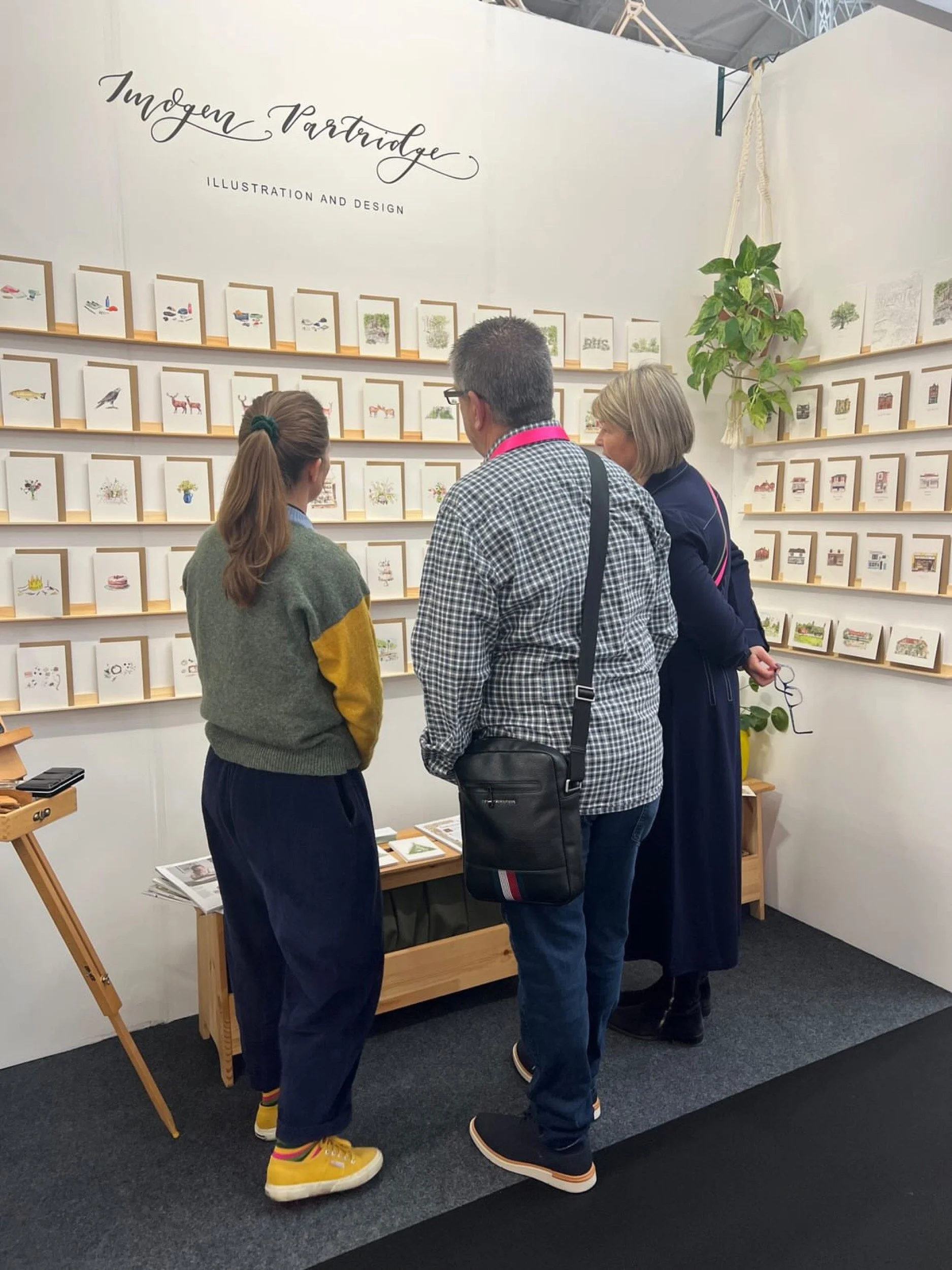
One of the things I love most about trade shows is the conversations. The preparation, worrying about it in advance and setting up is a mission, but I actually really enjoy it when it’s happening. It’s EXHAUSTING and takes all of my energy, especially for someone who needs time to recharge after social situations. But it’s totally worth it to have those chats and really understand how people see your work.
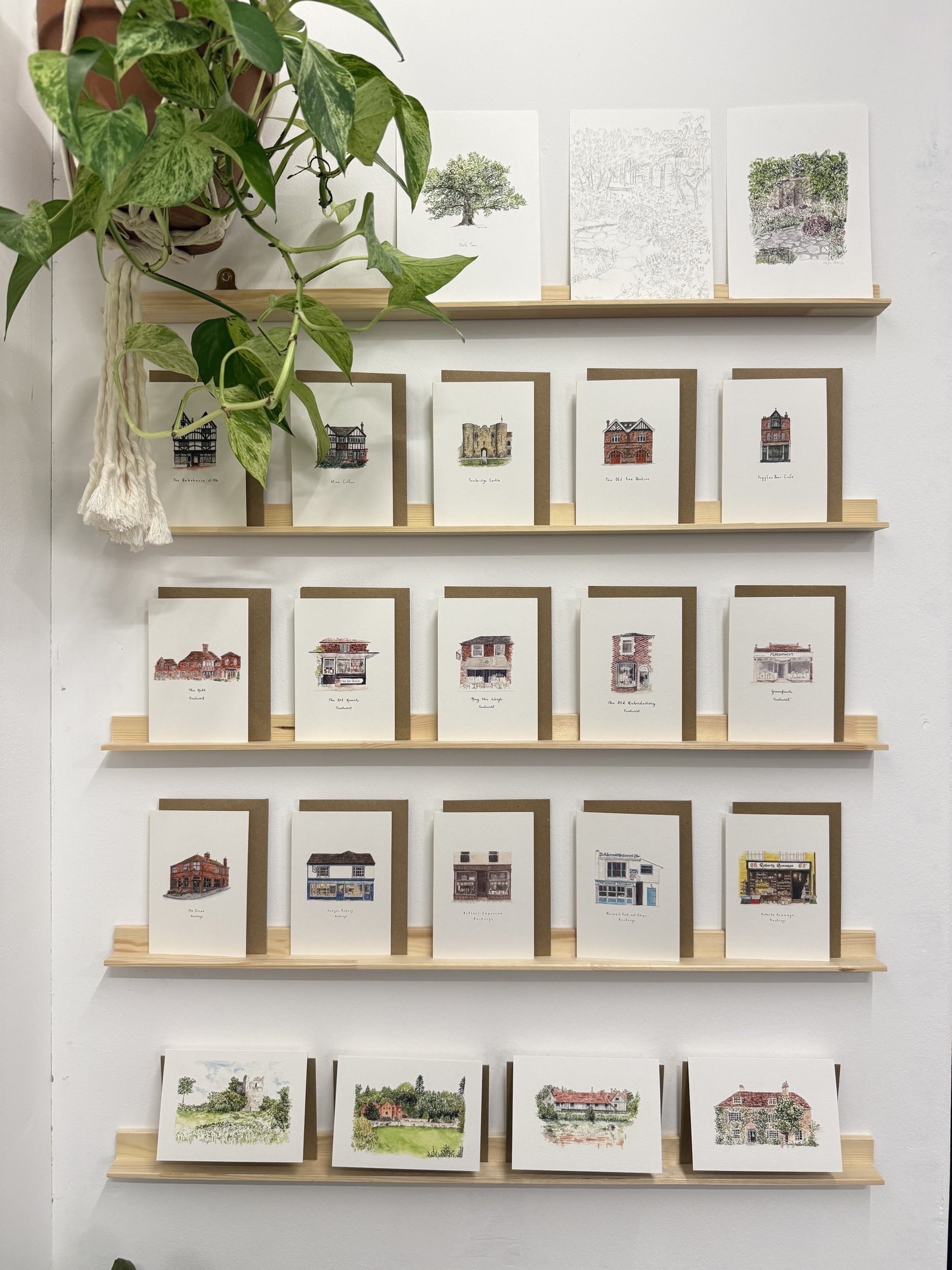
It was funny because I had conversations about writing or no writing on my cards. Some buyers told me they loved that my cards don’t have text, the next told me they would sell better if they did. Rather than feel frustrated or confused, this was actually such a good reminder that there is room for different tastes, different shops, different customers and I can adapt in a way that feels aligned for me.
Having existing stockists come to say hello was genuinely one of the best parts of the show. There’s something incredibly affirming about people reordering your work. It means it’s finding its place in the world, not just being tried once and then building the relationships with those stockists is such a pleasure. I am a real fan of independent shops and the communities they cultivate. I’m always a bit sad I can’t spend my days travelling the country to visit all my stockists, but it is a wonderful opportunity to get to catch up with them and I am so grateful for the kindness and warmth of the greetings card / independent shops community.
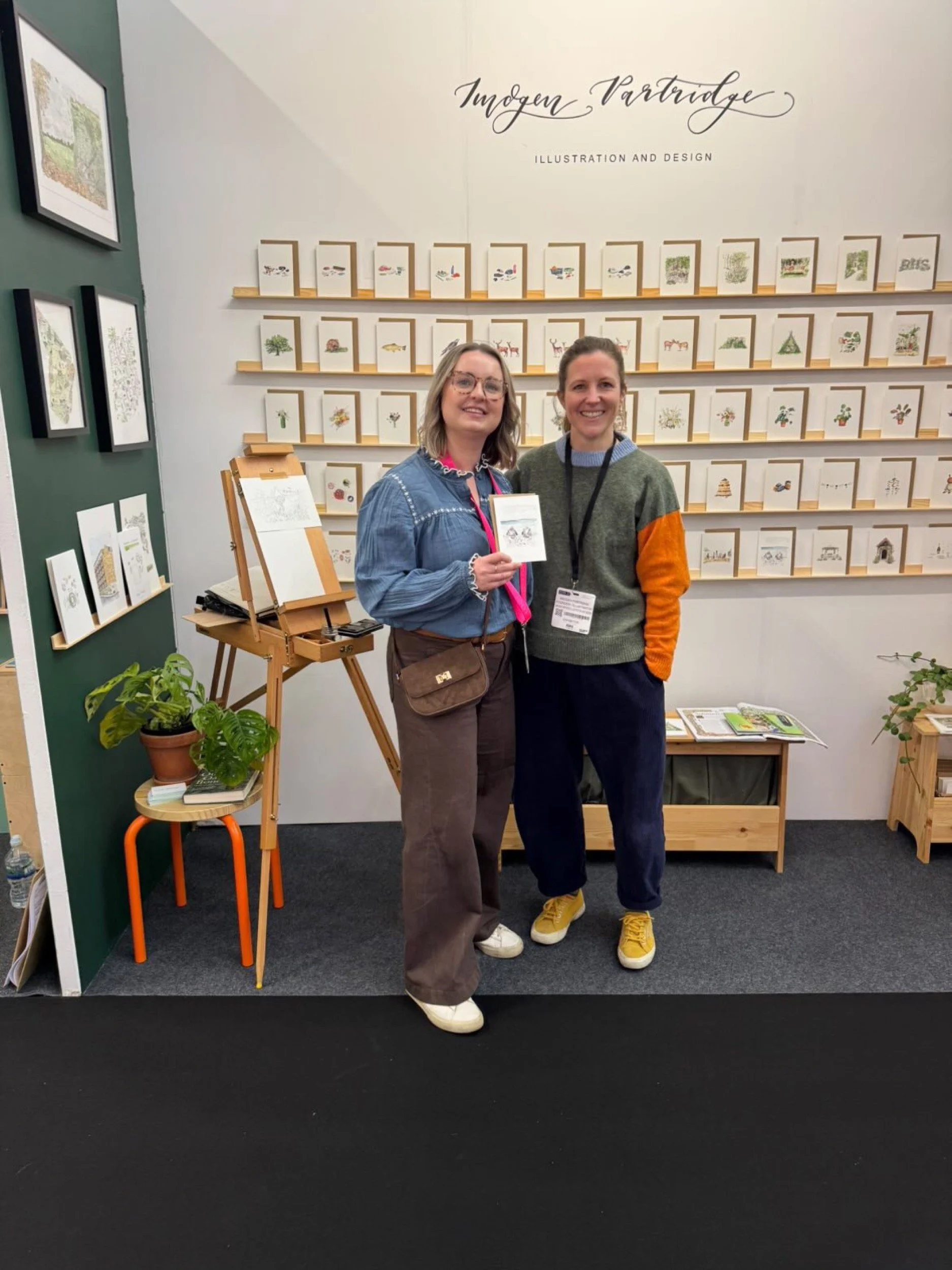
I also had lovely conversations with people who told me they loved my work but knew it wasn’t right for their shop, and that’s okay too. I really appreciate the honesty and am very comfortable with not being right for everyone. My lovely stand neighbour Leanne of Letterbox Lane has GORGEOUS colourful, thoughtful and fun designs and my work is TOTALLY different. If I was shopping for cards, I would buy hers over mine and that’s fine too. Trade shows are as much about this kind of feedback and these incredibly valuable conversations are they are about getting sales!
Break Down and the Admin Mountain
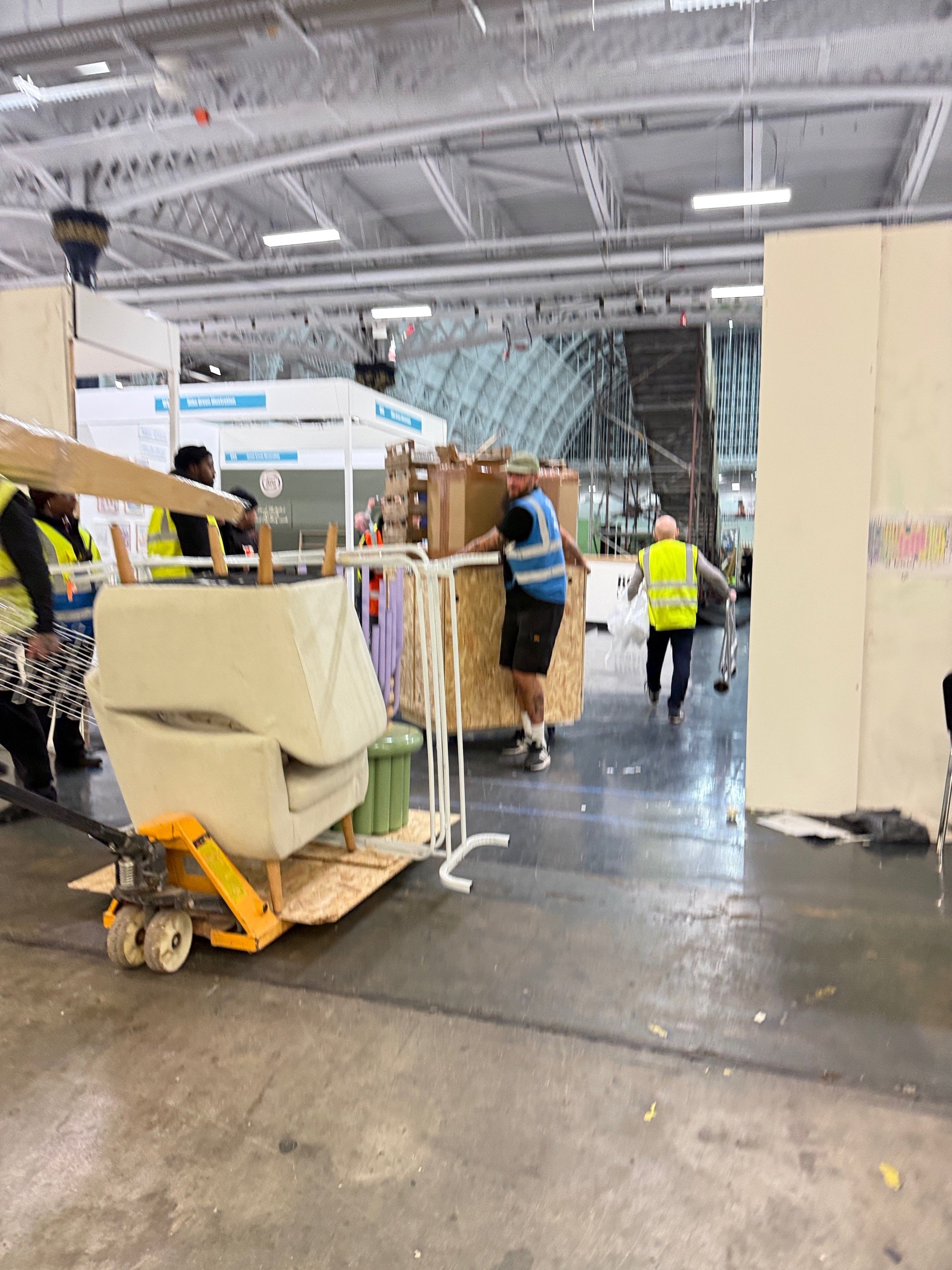
Break down (of the stand, not my brain) is thankfully much quicker than putting it all up. With my lovely husband coming with the car, I could just get on with taking everything down. It’s SO much quicker than set up, but it does get slightly frantic while everyone is packing away at the same time and desperate to get home, but it’s all manageable.
It took less than half an hour to get everything taken down and bundled into the car, and then we drove home. Unpacking afterwards is not a fun job when you’re that exhausted, but it’s one of those things that the sooner you do it, the bette.
The next day I planned to get straight into the admin, but I actually felt SO desperate for outside space and fresh air that, once I’d unpacked, I went for a walk and sat by a lake near our house for half an hour and did some painting. It was so nice to be outside, in the sun, listening to the birds and was definitely the peace and calm I needed. I highly recommend booking in time to do whatever you might need after a trade show.
After that, it was all the admin. Alongside other work commitments, it took me almost a month to feel fully on top of it. I used a spreadsheet and prioritised orders first, then specific enquiries, then people who had asked for a catalogue (the “easier” emails last).
I felt so guilty that I didn’t get through it faster, but I had to keep reminding myself that actually, it’s only cards. Nothing dreadful is going to happen if I don’t reply instantly and of course I got there in the end (and was very grateful for patient understanding buyers).
Was It a “Good” Show?
This was the question I was asked most often and it’s not an easy one to answer.
I had 14 orders in total from the show (more than last year and that’s mainly new and about 3 from existing stockists), positive leads to follow up, meaningful conversations, and people visiting my stand who had found me online or through previous work. I’ve also had orders since from people who don’t order at the show but came back to me afterwards. So I guess that counts as “good”, for me at least (some people might think that’s lots of orders and to others it’s hardly any, it’s all so relative!!).
However I think the real answer will come in six months, or a year, or even two years’ time. Wholesale, in particular is a slow burn, it’s about planting seeds and seeing what comes from those. It’s about letting people test your work with their customers, building relationships slowly, and being consistent over time.
The show itself is just the beginning, it’s definitely what happens afterwards is where the real work begins. (If you don’t know what I mean by this, the admin is mega, following up with people, checking in, designing new collections, proofing these, telling people about them, updating catalogues and websites, I could go on. The point is with wholesale, the more you put in the more you get out!).
The Bigger Picture
For me, exhibiting at Top Drawer wasn’t just about immediate return. It was about strengthening the wholesale side of my business, nurturing existing stockist relationships, putting my bespoke illustration work in front of new audiences and building my network in person as well as online.
Unlike social media or email lists, trade shows put your work in front of people who weren’t already looking for you. That brings invaluable feedback, perspective, and opportunity. It also really pushes me out of my comfort zone (mentally, physically, emotionally) and while that feels really hard at times, it’s also part of growth.
The Numbers
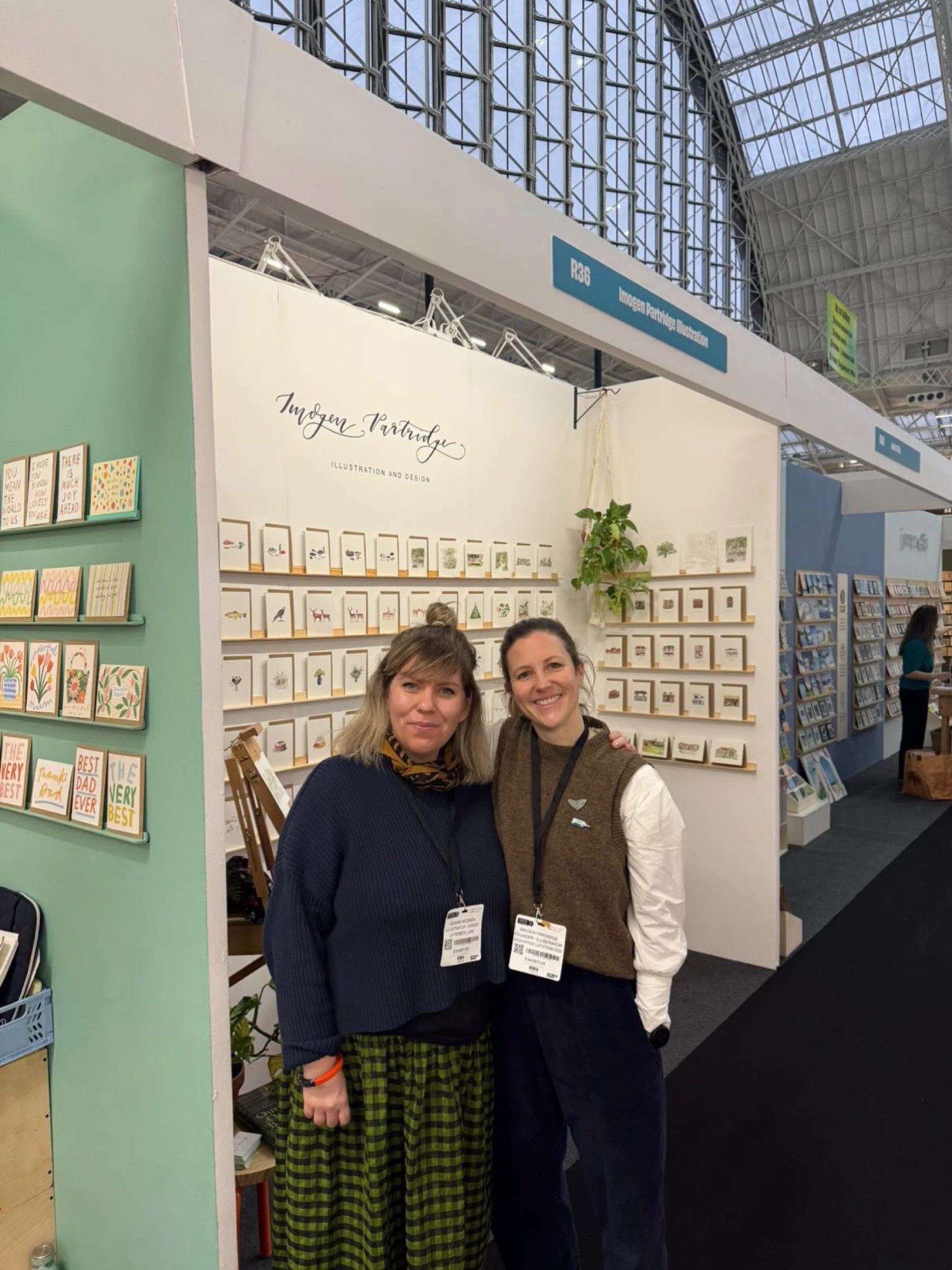
Me and my lovely stand neighbour Leanne from Letterbox Lane
Ok I know this is an important part for some of you. It is for me too of course, but as I’ve said before it’s really not just about numbers! However if you’re considering exhibiting I understand that it’s helpful to have some idea of costs.
Here’s a rough breakdown for transparency. These are approximate but hopefully give you an idea:
Shell stand 3x1m (including required exhibitor protection scheme, stand and marketing fee and tax) - £2295
Stand contractor works (lighting and returning one painted panel to white) £140
Stand setup costs (extra shelves and a vinyl sign, bearing in mind I spent about £200 on paint, shelves and things that I am reusing this year) - £75
Parking & travel (I got the train in each day and parking was for setup only) - £150
Cards (my printer can print small batches so I ordered 6 of each and will be able to use those, but the postcards I printed for people to takeaway are an investment) - £150
Then for reference current revenue:
Orders from the show - £1161
Orders after the show (so far) - £820
Note this is revenue only and profit is a smaller percentage of that and depends on the order sizes, whether carriage is paid by me (on larger orders) or the buyer. I’ll need to calculate profit once all orders have been processed and paid.
Again this is all relative and I nearly didn’t include this, but I do think it’s helpful to have a vague understanding of what orders equate to. I’m a small independent artist with a relatively small range of cards. Orders I take are mainly small independent who aren’t ordering vast quantities in one go, but they do add up.
Then there are additional costs like food which I took in lunch and snacks each day. Business cards which I had so didn’t buy new so I’m not sure what the cost of these would have been (I didn’t use many, people mainly took postcards).
So… Was It Worth It?
For me, yes.
Not because I can easily measure the success or define exact results, but because it feels like another stepping stone in a longer journey in which I am fully invested. Part of building foundations, reputation, and visibility, rather than a focus of success or failure of the course of three days.
If you’re considering exhibiting, I think the most important thing is to get clear on your goals. Not what looks impressive, not what everyone else is doing, but what genuinely aligns with the direction you want your business to go in. I think it can be really easy to get sucked in by the hype or get the fear of missing out that comes when you see others exhibiting. It’s important to define what is giving you that feeling. It could be because you wish you were there and think it’s really right for your business or would like to see if it might be. Or it could just be getting caught up in the shiny stuff and actually when you really look at your own goals and longer term vision, it’s maybe not where your time and money needs to be spent right now and that’s totally ok too.
Trade shows are expensive, demanding, and not right for everyone, but whatever the outcome, you will learn a huge amount, about your work, your capacity, and what you want more (or less) of moving forward.
Thank you for reading and if you have any other questions I’d be happy to answer them and if you are a lovely shop, gallery, or potential stockist and would like to find out more about stocking my cards then please just get in touch here and I’ll send over a catalogue.